RIFOX Kondensatableiter: RIFOmat, RIFOdyn, RIFObi oder RIFOjet — welche Baureihe wofür
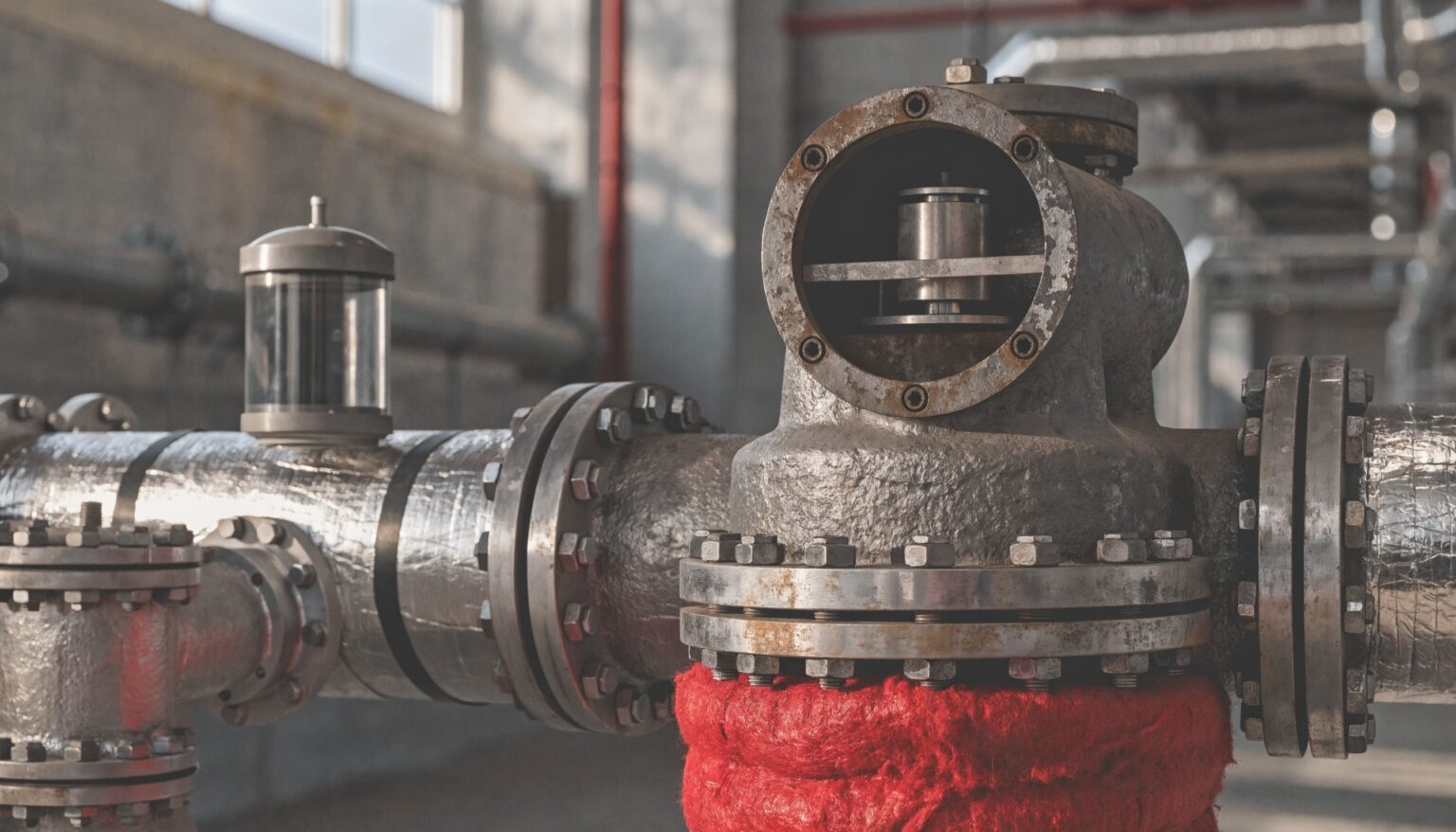
Die Frage nach dem richtigen RIFOX Kondensatableiter wird in der Praxis meist zu spät gestellt: erst dann, wenn an einer Entwässerungsstelle bereits ein Gerät sitzt und nicht das tut, was es soll. Dabei entscheidet sich die Eignung einer Baureihe an vier Größen, die lange vor der Bestellung feststehen — Betriebsdruck und Druckdifferenz, Kondensatmenge samt ihrem Verlauf über die Last, der zulässige Rückstau und die Frage, ob Sattdampf, Heißdampf oder ein Prozessmedium anliegt. Dieser Beitrag ordnet die RIFOX-Baureihen diesen vier Größen zu, damit Sie am Planungstisch entscheiden können und nicht erst an der Leitung.
Ing. Wilhelm Friedrich Gesellschaft m. b. H. vertritt RIFOX seit Jahren exklusiv für Österreich. Wir sehen die Baureihen deshalb nicht nur im Katalog, sondern in Anlagen, die seit Jahren laufen — und in Reklamationen, bei denen fast immer dieselben drei Auslegungsfehler dahinterstecken.
Die vier Größen, die vor der Baureihe feststehen müssen
Druck und Druckdifferenz. Nicht der Kesseldruck entscheidet, sondern die Differenz zwischen Druck vor und hinter dem Ableiter. Ein Gerät, das bei 12 bar Differenz sauber arbeitet, kann bei 0,3 bar Differenz im Anfahrbetrieb stehen bleiben. Die Nenndruckstufe des Gehäuses ist davon unabhängig und muss zusätzlich zur Leitung passen.
Kondensatmenge und ihr Verlauf. Entscheidend ist nicht der Spitzenwert, sondern die Spanne. Ein Wärmetauscher im Teillastbetrieb liefert über den Tag hinweg Mengen, die um den Faktor zehn auseinanderliegen. Eine Begleitheizung liefert über Stunden fast nichts.
Rückstau und Gegendruck. Wie hoch steht die Kondensatsammelleitung, und arbeitet sie unter Druck? Jede Bauart verträgt Gegendruck unterschiedlich gut, und genau hier scheitern die meisten nachträglich eingebauten Geräte.
Medium und Temperatur. Sattdampf, Heißdampf mit Überhitzung, Prozessgas oder eine Flüssigkeit aus einem Behälter — jede dieser Aufgaben schließt bestimmte Bauarten aus. Welche Bauarten wir dafür führen, zeigt unsere Übersicht zur Kondensattechnik; hier geht es um die Baureihe dahinter.
RIFOmat: der Schwimmerableiter für schwankende Mengen
RIFOmat ist die Baureihe, zu der wir am häufigsten raten, wenn die Kondensatmenge über die Last stark schwankt. Der Hersteller beschreibt das Funktionsprinzip so: Schwimmer-Ableiter sind niveauabhängig gesteuerte Proportionalregler. Läuft Kondensat zu, steigt der Flüssigkeitspegel im Gehäuse, die Schwimmerkugel treibt auf und öffnet über die Drehschiebersteuerung den Ventilabschluss. Das Gerät regelt also stetig und nicht in Takten.
Daraus folgen zwei Eigenschaften, die am Planungstisch zählen: Die Ableitung erfolgt ohne Aufstau, und sie ist von der Kondensattemperatur und von Druckschwankungen unabhängig. Vor dem Abschluss steht immer Wasser, dadurch geht keine Luft verloren. Für Wärmetauscher und Zuleitungen mit wechselnder Last ist das der entscheidende Unterschied zu allen thermisch gesteuerten Bauarten.
Die Druckstufen decken ein ungewöhnlich breites Feld ab. Die VARIO-Typen reichen von VARIO-S-1000 in PN 16/25 über VARIO-1100 (PN 25), VARIO-1200 und VARIO-1290 (PN 40) sowie VARIO-1400 (PN 100) bis zu VARIO-1940 (PN 160) und VARIO-1980 (PN 250). Daneben stehen die Typenreihen WO, EF und WU sowie die kompakten Typen Mini-N 1064-N (PN 16) und Minox-G-1170 beziehungsweise Minox-F-1171 (PN 25).
Der Unterschied zwischen WO/EF und WU ist der, an dem sich in der Praxis oft entscheidet, ob eine Anlage sauber anfährt: Die WU-Typen haben eine Innenentlüftung, wahlweise über Bimetall oder Kapsel. Wo beim Anfahren Luft im Rohr steht und der Ableiter sie nicht loswird, bleibt die Entwässerung kalt stehen. Sonderwerkstoffe bis hin zu Duplex-Stählen sind bei dieser Baureihe verfügbar — relevant überall dort, wo das Kondensat nicht reines Speisewasser ist.
RIFOdyn: thermodynamisch, für kleine und gleichmäßige Mengen
RIFOdyn arbeitet mit einer freien Ventilscheibe, deren Stellung von der strömenden Gas- oder Kondensatphase gesteuert wird. Der Aufbau ist denkbar einfach, die Reaktion entsprechend schnell. Vier Typen sind geführt: RD 321 und RD 329 in PN 40, RD 331 in PN 63 und RD 361 in PN 250.
Der Hersteller nennt als typische Einsatzfälle die Entwässerung von Sattdampfleitungen, Begleitheizungen und Lufterhitzern — also Stellen mit geringem Kondensatanfall. Genau das ist auch die Grenze der Baureihe: Wo große oder stark schwankende Mengen anfallen, ist der thermodynamische Ableiter das falsche Werkzeug, so robust er sonst ist. Und er braucht eine ausreichende Druckdifferenz, um überhaupt sauber zu schließen; bei sehr kleinen Differenzdrücken taktet er.
RIFObi und RIFOka: thermisch, und zwei verschiedene Antworten
Beide Baureihen öffnen bei einer definierten Temperatur unterhalb der Sattdampftemperatur und bleiben bei Sattdampf und überhitztem Dampf geschlossen. Sie werden gern in einen Topf geworfen, verhalten sich aber unterschiedlich.
RIFObi ist der thermische Bimetall-Kondensatableiter. Geführt sind die Typen 2227 und 2254 in PN 40, Duplex-HD 2440 in PN 100 und Super-Duplex 2550 in PN 160. Die Baureihe spielt ihre Stärke bei überhitztem Dampf aus — dort, wo das Dampfnetz über der Sattdampflinie fährt und ein temperaturgesteuertes Element sauber zumacht. Die Kehrseite: Bimetall reagiert träge, der Kondensatstau vor dem Ableiter ist bauartbedingt und muss bei der Auslegung der Leitung mitgedacht werden.
RIFOka ist der thermische Kapsel-Kondensatableiter und reagiert schneller. Die Typenliste reicht von Minibody-10201-N und Nirobody-10203-N über RIFOka 10210 und RK10290 beziehungsweise RK10291-N bis zum Flanschtyp Z-10250, alle in PN 40, dazu Steril-10260-N in PN 6 für sterile Anwendungen. Wo es auf kurze Reaktionszeit und ein kleines Gehäuse ankommt, ist Kapsel vor Bimetall die richtige Wahl.
RIFOjet: der Düsenableiter und seine klare Bedingung
RIFOjet ist die einfachste Bauart im Programm: ein Düsen-Kondensatableiter ohne bewegliche Teile. Das Kondensat sammelt sich vor der Düse und wird vom Dampfdruck durch die Düsenöffnung in die Kondensatleitung gedrückt. Geführt ist der Typ Simplex-4210 in PN 40.
Keine beweglichen Teile heißt nicht, dass keine Instandhaltung anfällt. Die Düse kann zusetzen, und sie wird im Rahmen der üblichen Durchsicht kontrolliert; ein zugesetzter Querschnitt staut das Kondensat zurück, ein ausgewaschener lässt Dampf durch. Was konkret instand gesetzt werden kann, hängt am Typ und klärt sich am Gerät, nicht im Katalog.
Die eigentliche Bedingung steht beim Hersteller in einem Satz: RIFOjet ist für kontinuierliche Entwässerungsprozesse mit definiertem Kondensatanfall gedacht. Die Düse wird auf einen Betriebspunkt ausgelegt. Fällt weniger Kondensat an als ausgelegt, strömt Dampf mit durch; fällt mehr an, staut es zurück. Wer einen Düsenableiter an eine Stelle mit schwankender Last setzt, hat sich für eine der beiden Störungen entschieden, ohne es zu merken. An getakteten Wärmetauschern gehört er deshalb nicht hin — dort ist RIFOmat die Baureihe der Wahl.
Was rund um den Ableiter sitzt
Ein Kondensatableiter löst seine Aufgabe nur so gut, wie die Armaturen davor und dahinter es zulassen. RIFOX führt dafür eigene Baureihen, und in einer Bestandsanlage ist der Fehler oft hier zu suchen und nicht im Ableiter selbst:
- RIFOdry — Zyklonabscheider und Feintrockner für die Dampf- und Gastrocknung. Sitzt vor dem Ableiter und hält Tropfen zurück, die sonst die Mengenbilanz verfälschen.
- RIFOair — selbsttätige Be- und Entlüftung für Behälter mit schwankendem Füllstand.
- RIFOlift — Kondensatheber für den mechanischen Transport auf ein höheres Niveau, wenn die Sammelleitung über der Entwässerungsstelle liegt.
- RIFOlevel — Niveauregler sowie Zulauf- und Ablaufregelventile zum Halten von Füllständen in Behältern.
- RIFOplus — Rückflusssperren, Schaugläser, Schmutzfänger, Ausdehnungsgefäße und Messtechnik.
Ob ein Ableiter tatsächlich arbeitet, lässt sich im laufenden Betrieb prüfen. Für die Kondensatüberwachung per Ultraschall- und Temperaturmessung führen wir die passenden Geräte in unserer Messtechnik; die Durchsicht an der Anlage übernimmt unsere Serviceabteilung. In Dampfumformstationen und an Einspritzkühlern gelten zusätzlich eigene Randbedingungen — dazu finden Sie die Armaturen in der Dampfumformtechnik.
Vorhandenen Fremdableiter tauschen: wann das sinnvoll ist
Ein Hinweis zur Methode, weil es hier um einen Vergleich geht: Wir vergleichen an dieser Stelle ausschließlich bauartbezogen — also RIFOX-Baureihen gegen die jeweilige Bauart eines Fremdgeräts, so wie sie in den Herstellerunterlagen beschrieben ist, Stand Oktober 2026. Preise, Durchsatzzahlen oder Verbrauchswerte einzelner Fremdfabrikate vergleichen wir hier nicht, weil uns dafür keine einheitliche, gleich aktuelle Grundlage für alle Anbieter vorliegt. Ein belastbarer Zahlenvergleich gehört an die konkrete Entwässerungsstelle und in ein Angebot, nicht in einen Blogbeitrag.
Bauartbezogen lohnt der Wechsel vor allem in drei Fällen. Erstens, wenn an einer Stelle mit stark schwankender Last ein thermisch oder thermodynamisch gesteuertes Gerät sitzt: Dort bringt der Umstieg auf einen Schwimmerableiter der Baureihe RIFOmat die stetige Ableitung, die das vorhandene Gerät bauartbedingt nicht leisten kann. Zweitens, wenn die Druckstufe des Bestandsgeräts die obere Grenze der Leitung berührt — RIFOmat reicht bis PN 250, RIFOdyn mit RD 361 ebenfalls, RIFObi mit Super-Duplex 2550 bis PN 160. Drittens, wenn Werkstoffe gefragt sind, die das Bestandsfabrikat nicht anbietet.
Und wann nicht? Wenn an einer Begleitheizung ein kleiner thermodynamischer Ableiter sitzt, der seit Jahren unauffällig läuft, ist ein Tausch um des Tauschs willen keine gute Idee. Fremdfabrikate sind nicht schlechter, weil sie fremd sind — sie sind an der falschen Stelle falsch, genau wie unsere eigenen. Der Unterschied, den wir anbieten, liegt darin, dass wir die Baureihe zur Entwässerungsstelle suchen und nicht umgekehrt, und dass die Beratung in Österreich sitzt.
Welcher RIFOX Kondensatableiter passt zu welcher Entwässerungsstelle
Die Zuordnung in Kurzform, in der Reihenfolge, in der wir sie im Gespräch abarbeiten:
- Wärmetauscher, Prozessapparat, Zuleitung mit wechselnder Last — RIFOmat. Bei Anfahrproblemen mit Luft die WU-Typen mit Innenentlüftung.
- Sattdampfleitung, Begleitheizung, Lufterhitzer, kleine gleichmäßige Menge — RIFOdyn, Typ nach Druckstufe: RD 321 oder RD 329 (PN 40), RD 331 (PN 63), RD 361 (PN 250).
- Überhitzter Dampf, Temperatursteuerung gewünscht — RIFObi. Duplex-HD 2440 für PN 100, Super-Duplex 2550 für PN 160.
- Kurze Reaktionszeit, kompaktes Gehäuse, sterile Anwendung — RIFOka, für sterile Fälle Steril-10260-N.
- Konstanter, bekannter Kondensatanfall ohne Lastwechsel — RIFOjet Simplex-4210.
- Kondensat muss auf ein höheres Niveau — RIFOlift, zusätzlich zum Ableiter.
Zwei Größen fehlen in dieser Liste absichtlich, weil sie sich nicht pauschalisieren lassen: die Nennweite und der zulässige Rückstau. Beide ergeben sich erst aus der Kondensatmenge und dem Druck in der Sammelleitung. Wer uns diese beiden Zahlen nennt, bekommt eine Typenempfehlung statt einer Baureihenempfehlung.
Häufige Fragen
Woran merke ich, dass der Ableiter eine Nummer zu groß ausgelegt ist?
Ein überdimensionierter Ableiter taktet bei Teillast und bläst im Takt Dampf mit ab, weil er nie gefüllt ist. Bei Schwimmerableitern zeigt sich das als hörbares Schlagen, bei thermodynamischen Geräten als auffällig kurze Schaltzyklen. Eine Kontrolle mit Ultraschall- und Temperaturmesstechnik unterscheidet das zuverlässig von einem defekten Gerät.
Kann ich einen Kondensatableiter senkrecht einbauen?
Das hängt an der Bauart und am Typ, nicht am Fabrikat. Schwimmerableiter sind in der Regel auf eine Einbaulage festgelegt, weil die Schwimmerkugel sonst nicht führt. Düsenableiter sind in der Lage unkritischer, reagieren dafür empfindlich auf Rückstau. Die zulässige Einbaulage steht im Datenblatt des jeweiligen Typs — und sie ist einer der Punkte, die wir vor dem Angebot abfragen.
Was ist der Unterschied zwischen RIFObi und RIFOka in der Praxis?
Beide steuern über Temperatur. RIFObi mit Bimetall ist bei überhitztem Dampf im Vorteil, reagiert aber träger und staut das Kondensat vor dem Gerät auf. RIFOka mit Kapsel reagiert schneller und hat das kleinere Gehäuse. Wo beides passt, entscheidet die Druckstufe: RIFOka ist bis PN 40 geführt, RIFObi mit Super-Duplex 2550 bis PN 160.
Brauche ich vor jedem Ableiter einen Schmutzfänger?
Nicht vorgeschrieben, aber in einem Netz mit Altbestand fast immer sinnvoll — besonders vor Düsenableitern, deren Querschnitt klein ist. RIFOplus führt Schmutzfänger, Rückflusssperren und Schaugläser dafür. Ein Schauglas unmittelbar nach dem Ableiter erspart später viel Rätselraten.
Liefern Sie RIFOX auch außerhalb Österreichs?
Die Vertretung für RIFOX ist exklusiv für Österreich. Unser Servicegebiet reicht darüber hinaus nach Tschechien, in die Slowakei, nach Ungarn, Slowenien und Italien; in Südosteuropa sind wir seit 2019 tätig. Was im Einzelfall möglich ist, klären wir direkt.
Fazit
Ein RIFOX Kondensatableiter ist keine Katalognummer, sondern das Ergebnis von vier Fragen: Wie groß ist die Druckdifferenz, wie stark schwankt die Kondensatmenge, wie viel Rückstau liegt an, und welches Medium ist es? Schwankt die Menge, führt der Weg zu RIFOmat. Ist sie klein und gleichmäßig, zu RIFOdyn. Ist der Dampf überhitzt, zu RIFObi. Braucht es Tempo und ein kleines Gehäuse, zu RIFOka. Und ist der Anfall wirklich konstant, dann — und nur dann — zu RIFOjet.
Wenn Sie die vier Größen für Ihre Entwässerungsstelle zur Hand haben, nennen wir Ihnen den Typ. Haben Sie sie nicht, sehen wir sie uns gemeinsam an: Ing. Wilhelm Friedrich Gesellschaft m. b. H., Gewerbegebiet 10, 2100 Stetten, Telefon +43 2262 63510.
RIFOX steam traps: which series for which steam application
In practice, the question of the right RIFOX steam trap is usually asked too late — only once a device is already sitting at a drain point and failing to do its job. Yet whether a series fits is settled by four quantities that are known long before the order goes out: operating pressure and differential pressure, condensate load and how it behaves across the duty range, the permissible backpressure, and whether the medium is saturated steam, superheated steam or a process fluid. This article maps the RIFOX series onto those four quantities, so the decision can be made at the planning desk rather than at the pipe.
Ing. Wilhelm Friedrich Gesellschaft m. b. H. has represented RIFOX exclusively for Austria for years. We therefore see these series not only in the catalogue but in plants that have been running for years — and in complaints, where almost always the same three sizing mistakes are behind the problem.
The four quantities to settle before choosing a series
Pressure and differential pressure. What matters is not boiler pressure but the difference between the pressure upstream and downstream of the trap. A device that works cleanly at 12 bar differential may stall at 0.3 bar during start-up. The body pressure rating is a separate matter and has to suit the line as well.
Condensate load and its profile. The decisive figure is not the peak but the span. A heat exchanger running at part load delivers quantities over the course of a day that differ by a factor of ten. A trace heating line delivers next to nothing for hours.
Backpressure. How high does the condensate header run, and is it pressurised? Each design tolerates backpressure differently, and this is precisely where most retrofitted devices fail.
Medium and temperature. Saturated steam, superheated steam, process gas or a liquid drawn from a vessel — each of these rules out certain designs. Which designs we supply is shown in our condensate technology overview; what follows is about the series behind them.
RIFOmat: the float trap for fluctuating loads
RIFOmat is the series we recommend most often when the condensate load varies strongly with duty. The manufacturer describes the principle as follows: float traps are level-controlled proportional regulators. As condensate flows in, the liquid level inside the body rises, the float ball lifts and opens the valve closure via the rotary slide valve control. The device therefore modulates continuously rather than cycling.
Two consequences matter at the planning desk: discharge takes place without build-up, and it is independent of condensate temperature and of pressure fluctuations. There is always water standing ahead of the closure, so no air is lost. For heat exchangers and supply lines with changing load, that is the decisive difference from every thermally controlled design.
The pressure ratings cover an unusually wide field. The VARIO types run from VARIO-S-1000 at PN 16/25 through VARIO-1100 (PN 25), VARIO-1200 and VARIO-1290 (PN 40) and VARIO-1400 (PN 100) up to VARIO-1940 (PN 160) and VARIO-1980 (PN 250). Alongside them sit the WO, EF and WU type ranges and the compact types Mini-N 1064-N (PN 16) and Minox-G-1170 or Minox-F-1171 (PN 25).
The difference between WO/EF and WU often decides whether a plant starts up cleanly: the WU types have internal venting, either by bimetal or by capsule. Where air stands in the pipe at start-up and the trap cannot clear it, the drain line stays cold. Special materials up to duplex steels are available in this series — relevant wherever the condensate is not clean feedwater.
RIFOdyn: thermodynamic, for small and steady loads
RIFOdyn works with a free valve disc whose position is controlled by the flowing gas or condensate phase. The construction is about as simple as it gets, and the response is correspondingly quick. Four types are listed: RD 321 and RD 329 at PN 40, RD 331 at PN 63 and RD 361 at PN 250.
The manufacturer names the drainage of saturated steam lines, trace heating and air heaters as typical applications — that is, points with a low condensate load. That is also the limit of the series: where large or strongly fluctuating quantities occur, a thermodynamic trap is the wrong tool, however robust it otherwise is. It also needs sufficient differential pressure to close cleanly; at very low differentials it cycles.
RIFObi and RIFOka: thermal, and two different answers
Both series open at a defined temperature below saturated steam temperature and stay closed under saturated and superheated steam. They are often treated as one, but they behave differently.
RIFObi is the thermal bimetal steam trap. The listed types are 2227 and 2254 at PN 40, Duplex-HD 2440 at PN 100 and Super-Duplex 2550 at PN 160. The series plays to its strengths with superheated steam, where the network runs above the saturation line and a temperature-controlled element closes cleanly. The flip side: bimetal responds slowly, and the condensate banking up ahead of the trap is inherent to the design and has to be allowed for when sizing the line.
RIFOka is the thermal capsule steam trap and responds faster. The type list runs from Minibody-10201-N and Nirobody-10203-N through RIFOka 10210 and RK10290 or RK10291-N to the flanged type Z-10250, all at PN 40, plus Steril-10260-N at PN 6 for sterile applications. Where short response time and a small body matter, capsule beats bimetal.
RIFOjet: the nozzle trap and its one clear condition
RIFOjet is the simplest design in the programme: a nozzle steam trap with no moving parts. Condensate collects ahead of the nozzle and is pushed through the nozzle opening into the condensate line by steam pressure. The listed type is Simplex-4210 at PN 40.
No moving parts does not mean no servicing. The nozzle can block, and it is checked as part of the normal inspection; a blocked bore backs the condensate up, a washed-out one lets steam through. What can actually be repaired depends on the type and is settled at the device, not in the catalogue.
The real condition is stated by the manufacturer in a single line: RIFOjet is intended for continuous drainage processes with a defined condensate load. The nozzle is sized for one operating point. If less condensate arrives than designed for, steam passes through with it; if more arrives, it backs up. Anyone fitting a nozzle trap at a point with varying load has chosen one of those two faults without noticing. It therefore does not belong on cycling heat exchangers — RIFOmat is the series of choice there.
What sits around the trap
A steam trap can only do its job as well as the fittings before and after it allow. RIFOX supplies its own series for this, and in an existing plant the fault is often here rather than in the trap itself: RIFOdry cyclone separators and fine dryers for steam and gas drying, fitted upstream to hold back droplets that would otherwise distort the load balance; RIFOair automatic venting for vessels with a fluctuating level; RIFOlift condensate lifters for mechanical transfer to a higher level; RIFOlevel level regulators and inlet and outlet control valves; and RIFOplus check valves, sight glasses, strainers, expansion vessels and measuring equipment.
Whether a trap is actually working can be checked in operation, by ultrasonic and temperature measurement. Inspection on site is handled by our own service department, in Austria since 2021 and in Czechia, Slovakia, Hungary, Slovenia and Italy since 2023.
Replacing a third-party trap: when it makes sense
A note on method, because this is a comparison: we compare strictly by design type here — RIFOX series against the corresponding design of a third-party device as described in that manufacturer’s own documentation, as of October 2026. We do not compare prices, capacity figures or consumption values of individual third-party makes, because we have no uniform and equally current basis for all suppliers. A comparison backed by numbers belongs at the actual drain point and in a quotation, not in a blog article.
On that basis, a change is worth considering in three cases. First, where a thermally or thermodynamically controlled device sits at a point with strongly varying load: switching to a RIFOmat float trap gives the continuous discharge the existing device cannot provide by design. Second, where the pressure rating of the existing device is at the limit of the line — RIFOmat goes up to PN 250, RIFOdyn with RD 361 likewise, RIFObi with Super-Duplex 2550 up to PN 160. Third, where materials are required that the existing make does not offer.
And when not? If a small thermodynamic trap on a trace heating line has been running unobtrusively for years, replacing it for its own sake is not a good idea. Third-party makes are not worse for being third-party — they are wrong in the wrong place, exactly as ours are. The difference we offer is that we look for the series to suit the drain point rather than the other way round, and that the advice sits in Austria.
Which RIFOX steam trap suits which drain point
The mapping in short form, in the order we work through it in conversation:
- Heat exchanger, process vessel, supply line with changing load — RIFOmat; with air problems at start-up, the WU types with internal venting.
- Saturated steam line, trace heating, air heater, small steady load — RIFOdyn, type by pressure rating: RD 321 or RD 329 (PN 40), RD 331 (PN 63), RD 361 (PN 250).
- Superheated steam, temperature control preferred — RIFObi; Duplex-HD 2440 for PN 100, Super-Duplex 2550 for PN 160.
- Short response time, compact body, sterile application — RIFOka; Steril-10260-N for sterile duties.
- Constant, known condensate load with no load changes — RIFOjet Simplex-4210.
- Condensate has to be lifted to a higher level — RIFOlift, in addition to the trap.
Two quantities are deliberately missing from that list because they cannot be generalised: the nominal size and the permissible backpressure. Both follow from the condensate load and the pressure in the header. Tell us those two figures and you get a type recommendation instead of a series recommendation.
Frequently asked questions
How do I tell that a trap is one size too large?
An oversized trap cycles at part load and blows steam through with each cycle, because it is never full. On float traps this shows up as audible hammering, on thermodynamic devices as noticeably short switching cycles. A check with ultrasonic and temperature measurement reliably tells that apart from a failed device.
Can a steam trap be installed vertically?
That depends on the design and the type, not on the make. Float traps are usually fixed to one installation position, because the float ball will not otherwise guide. Nozzle traps are less critical about position but more sensitive to backpressure. The permissible installation position is given in the data sheet for the specific type — and it is one of the points we ask about before quoting.
What is the practical difference between RIFObi and RIFOka?
Both are temperature-controlled. RIFObi with bimetal has the advantage under superheated steam but responds more slowly and banks condensate up ahead of the device. RIFOka with capsule responds faster and builds smaller. Where both fit, the pressure rating decides: RIFOka is listed up to PN 40, RIFObi with Super-Duplex 2550 up to PN 160.
Do I need a strainer ahead of every trap?
Not mandatory, but almost always sensible in a network with older sections — particularly ahead of nozzle traps, whose bore is small. RIFOplus supplies strainers, check valves and sight glasses for this. A sight glass immediately downstream of the trap saves a great deal of guesswork later.
Do you supply RIFOX outside Austria?
The RIFOX agency is exclusive to Austria. Our service area extends beyond it to Czechia, Slovakia, Hungary, Slovenia and Italy; we have been active in South-Eastern Europe since 2019. What is possible in an individual case is best clarified directly.
Conclusion
A RIFOX steam trap is not a catalogue number but the result of four questions: how large is the differential pressure, how strongly does the condensate load vary, how much backpressure is there, and which medium is it? If the load varies, the answer is RIFOmat. If it is small and steady, RIFOdyn. If the steam is superheated, RIFObi. If speed and a small body are needed, RIFOka. And if the load really is constant, then — and only then — RIFOjet.
If you have those four quantities for your drain point, we will name the type. If you do not, we will look at them with you: Ing. Wilhelm Friedrich Gesellschaft m. b. H., Gewerbegebiet 10, 2100 Stetten, Austria, phone +43 2262 63510.
