PERSTA Armaturen aus Schmiedestahl: wann Guss im Hochdruck- und Heißdampfnetz nicht mehr genügt
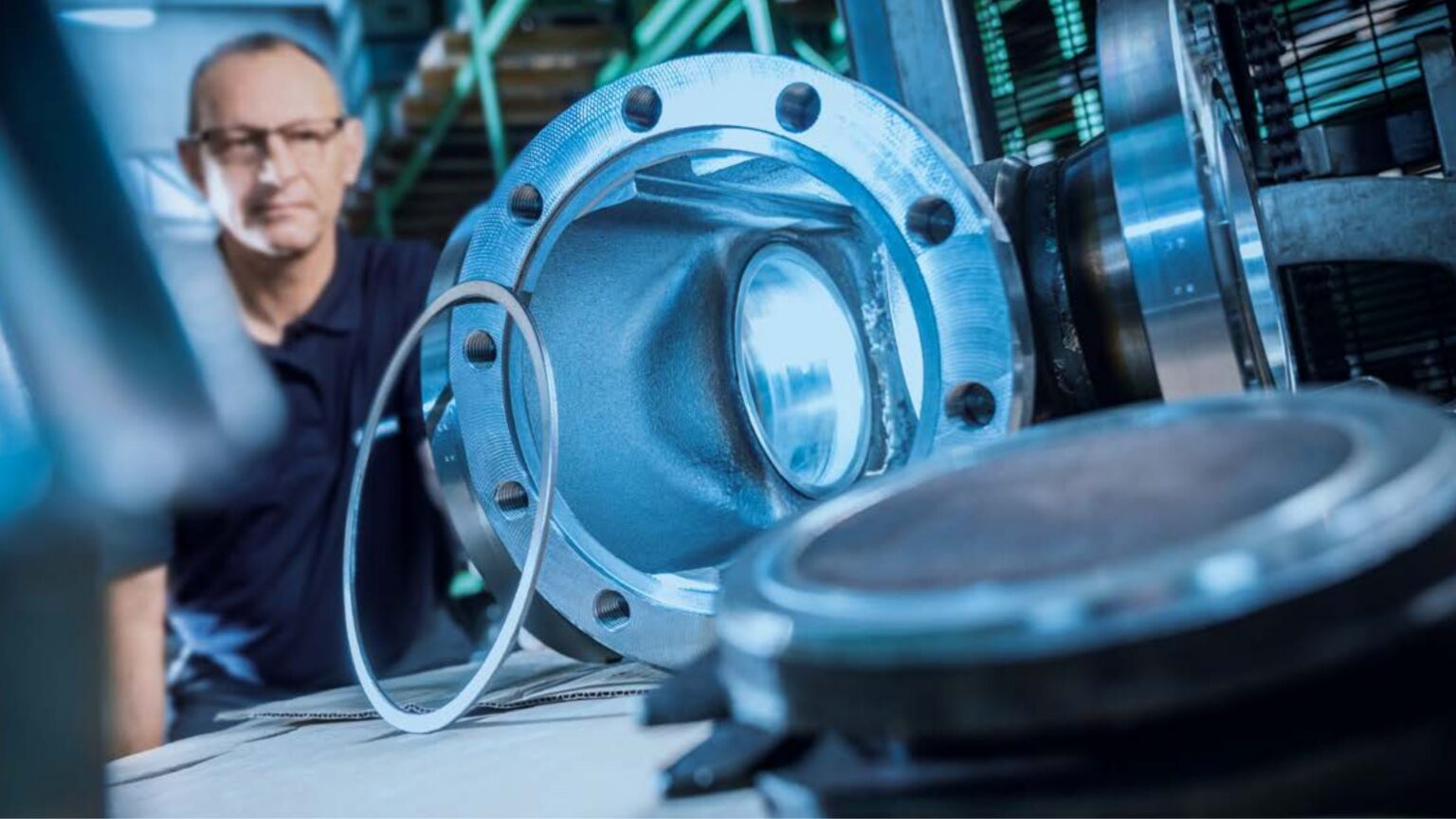
PERSTA Armaturen tauchen in Anfragen fast immer dann auf, wenn eine Leitung an ihre Grenze kommt: Der Druck steigt, die Temperatur steigt, und die Armatur, die bisher ihren Dienst getan hat, hält die Dichtheit nicht mehr. Gefragt wird dann meist nach dem Fabrikat. Beantwortet werden müsste zuerst eine andere Frage: geschmiedet oder gegossen? An dieser Stelle entscheidet nicht der Markenname, sondern der Werkstoff und die Art, wie das Gehäuse entstanden ist. Dieser Beitrag zieht die Grenzlinie — ab welchen Druck- und Temperaturbedingungen eine geschmiedete Stahlarmatur die richtige Wahl ist, wo Guss seine Aufgabe nach wie vor erfüllt, und wann die Aufgabe gar nicht Absperren heißt, sondern Rückfluss sperren oder im Störfall zufallen.
Was „geschmiedet“ an einer Armatur tatsächlich ändert
Ein gegossenes Gehäuse entsteht aus der Schmelze in der Form. Ein geschmiedetes Gehäuse entsteht aus einem Vormaterial, das unter Druck umgeformt wird. Der Unterschied liegt im Gefüge: Beim Schmieden wird der Faserverlauf der Umformung folgend ausgerichtet und das Gefüge verdichtet, während Gussteile in dickwandigen Bereichen zu Lunkern, Poren und Seigerungen neigen. Das ist kein Qualitätsurteil über Guss, sondern eine Eigenschaft des Verfahrens — und sie wird genau dort relevant, wo das Gehäuse gleichzeitig hohen Innendruck und hohe Temperatur über lange Betriebszeiten trägt.
PERSTA Stahl-Armaturen GmbH mit Sitz in Warstein formuliert das selbst in einem Satz: Man gießt nicht, man schmiedet selbst. Das Vormaterial kommt aus dem Mutterhaus SIEPMANN-WERKE, einem Schmiedebetrieb — weshalb in Suchanfragen gelegentlich auch der Name Siepmann auftaucht, wenn eigentlich PERSTA gemeint ist. Für die Auswahlentscheidung ist daran vor allem eines wichtig: Die drucktragenden Teile sind durchgängig Schmiedeteile, nicht nur in der höchsten Druckstufe.
Die Grenzlinie in Zahlen: Nennweite, Druck und 650 Grad
PERSTA gibt für die drei relevanten Produktgruppen folgende Grenzen an: Ventile bis DN 250, PN 630 und +650 °C, Schieber bis DN 1000, PN 630 und +650 °C, Rückschlagklappen bis DN 800, PN 630 und +650 °C. Als Gehäusewerkstoffe für die drucktragenden Teile stehen unter anderem 1.5415 (16Mo3), 1.7335 (13CrMo4-5), 1.7383 (10CrMo9-10) sowie die warmfesten Chromstähle 1.4903 (P91) und 1.4901 (P92) zur Verfügung, dazu nichtrostende Werkstoffe wie 1.4571 und 1.4581.
Praktisch brauchbar wird diese Liste erst durch die Zuordnung. Bis etwa 450 °C und moderaten Drücken trägt 16Mo3 die Aufgabe. Im Bereich darum herum, bei Heißdampf in klassischen Industriekesseln, liegt 13CrMo4-5 oder 10CrMo9-10. Erst oberhalb, bei Frischdampfparametern moderner Kraftwerksblöcke, kommen P91 und P92 ins Spiel — und dort ist die Werkstoffwahl keine Vorliebe mehr, sondern durch die Zeitstandfestigkeit vorgegeben. Wer eine Armatur in diesem Bereich einsetzt, bestellt den Werkstoff, nicht das Fabrikat; das Fabrikat entscheidet dann, wer ihn in der gewünschten Bauform und Nennweite liefern kann.
Zur Methode: Die genannten Grenzwerte sind Herstellerangaben von PERSTA, abgerufen Anfang Oktober 2026 auf persta.com. Die gegenübergestellten Werkstoff- und Druckbereiche stammen von den Produktseiten der Absperrventile und Absperrschieber der Ing. Wilhelm Friedrich Gesellschaft m. b. H. Verglichen werden Baureihen und Werkstoffgruppen innerhalb des vertretenen Lieferprogramms, keine Fremdfabrikate. Die Angaben werden bei jeder Katalogänderung des Herstellers nachgezogen; maßgeblich für ein Projekt bleibt das Datenblatt zur konkreten Ausführung.
Wo Guss seine Aufgabe erfüllt
Der Werkstoffbereich der Absperrventile und Absperrschieber reicht von EN-GJL-250 über P250GH und GP240GH+N bis 13CrMo4-5, G17CrMo5-5 und Edelstahl. Die beiden erstgenannten Gussvarianten sind nicht die Sparversion, sondern die zutreffende Wahl für einen großen Teil der Anwendungen: Wasser, Kühlkreise, Niederdruckdampf, Heizungs- und Betriebsmedienleitungen. Dort ist die Beanspruchung weit von den Grenzen des Werkstoffs entfernt, die Gehäusewandstärke unkritisch, und ein Schmiedegehäuse brächte keinen Nutzen, der den Preis rechtfertigt.
Die Linie verschiebt sich dort, wo drei Dinge zusammenkommen: Temperatur im Zeitstandbereich, häufige Lastwechsel und eine Leitung, die im Betrieb nicht ohne weiteres freigeschaltet werden kann. Grauguss fällt in Heißdampfanwendungen schon wegen seiner Sprödbruchneigung aus. Stahlguss trägt deutlich weiter, verlangt in dickwandigen Bereichen aber eine Prüfung, die beim Schmiedeteil weniger Thema ist. Wer die Entscheidung abkürzen will, fragt nicht nach dem Verfahren, sondern nach drei Zahlen: Betriebsdruck, Betriebstemperatur und Anzahl der Lastwechsel pro Jahr.
Schieber oder Ventil im Hochdrucknetz
Die Bauformfrage wird oft nach Gewohnheit entschieden, obwohl sie sich an zwei Kriterien festmachen lässt. Der Schieber sperrt mit vollem Sitzdurchgang ab: Im offenen Zustand steht der Querschnitt frei, der Druckverlust ist gering, Verschleiß und Strömungsgeräusch bleiben niedrig. Dafür braucht er Bauhöhe, er regelt nicht, und er mag keine Teillöffnung — ein angedrosselter Schieber ruiniert sich den Sitz. Das Ventil dagegen bringt Dichtheit und Drosselverhalten mit, kostet dauerhaft Druckverlust und ist in großen Nennweiten schwer und teuer.
In der Praxis entscheidet häufig schon die Nennweite. Die Ventilbaureihen enden bei DN 250, die Schieber reichen bis DN 1000. Oberhalb von DN 250 ist die Diskussion damit beendet. Darunter gilt: Hauptabsperrung in einer Sammel- oder Frischdampfleitung, die betriebsmäßig offen oder geschlossen steht, ist eine Schieberaufgabe. Entleerungen, Entlüftungen, Anfahrumleitungen, Einspritzleitungen und alles, wo ein Kegel definierte Durchflüsse einstellen soll, gehört zum Ventil — teils mit Drosselkegel, teils als Kombination aus Absperr- und Rückschlagfunktion in einem Gehäuse.
Wenn die Aufgabe nicht Absperren ist
Ein beträchtlicher Teil der Fehlgriffe entsteht, weil eine Absperrarmatur eine Aufgabe übernehmen soll, für die sie nicht gemacht ist. Drei Aufgaben sind sauber zu trennen.
- Rückfluss sperren. Das ist die Rückschlagklappe. Die Ausführungen reichen von der einfachen Klappe mit innenliegender Klappenwelle und druckdichtem Deckel über Varianten mit Hebel und Gewicht, Schließfeder oder Dämpfungszylinder bis zum Freiflussrückschlagventil mit pneumatischer oder hydraulischer Betätigung. Hebel, Gewicht und Dämpfung sind keine Ausstattung, sondern die Antwort auf Schlaggeräusche und Druckstöße beim Schließen.
- Absperren und Rückfluss sperren in einem. Dafür gibt es das Stop-Check-Ventil: Es schließt selbsttätig gegen Rückströmung und lässt sich zusätzlich von Hand oder über den Antrieb zugefahren und verriegeln. Typisch an Kesselspeiseleitungen und an Anzapfungen.
- Im Störfall zufallen. Das ist Sicherheitstechnik und nicht dieselbe Produktfamilie. Die Sicherheits-Schnellschluss-Ventile schließen bei Ausfall der Hilfsenergie durch Federkraft, nach Angabe innerhalb einer Sekunde, in Regelfunktion innerhalb von fünf Sekunden. Geführt werden sie nach Medium und Nennweite: ASVG in DN 15 bis 25 und KVAZ in DN 40 und 50 für Öl, GSV in DN 80 bis 150 und FDS-VE in DN 65 bis 300 ebenfalls für Öl, ASV in DN 15 bis 25 für Gas und Dampf sowie KVAZ in DN 32 bis 50 für Gas.
Wer die drei Aufgaben trennt, bestellt am Ende meist eine Armatur weniger — und keine, die eine Funktion nur näherungsweise erfüllt.
Spindelabdichtung und Antrieb bei Heißdampf
Oberhalb von etwa 400 °C wird die Spindelabdichtung zum eigentlichen Thema. Eine Stopfbuchse mit Graphitpackung ist nachstellbar und im Betrieb zugänglich, verlangt aber Aufmerksamkeit: Sie ist die Stelle, an der ein Heißdampfnetz zuerst zu zischen beginnt. Eine Faltenbalgabdichtung nimmt die Bewegung in einem metallischen Balg auf und trennt das Medium von der Packung; die Stopfbuchse dahinter bleibt als zweite Barriere erhalten. Wo Emissionsanforderungen im Raum stehen, ist das die Ausführung, nach der gefragt wird — die Produktseiten führen Faltenbalgabdichtung und Ausführungen nach TA-Luft ausdrücklich als Sonderausführung.
Beim Antrieb geht es weniger um die Technik als um die Schnittstelle. Handbetätigung, elektrisch, pneumatisch oder hydraulisch — entscheidend ist, dass Flanschbild und Drehmomentbedarf zusammenpassen und dass die Stellzeit zur Aufgabe passt. ISO 5211 beschreibt die Anschlussmaße für Schwenkantriebe; das ist eine Information für die Bestellung, kein Auswahlkriterium zwischen Fabrikaten.
Was sich an PERSTA Armaturen instand setzen lässt — und was nicht
Instandsetzbar ist alles, was im Betrieb verschleißt: Packung und Spindelabdichtung werden getauscht, Dichtflächen an Sitz und Kegel lassen sich nacharbeiten, solange genug Material vorhanden ist, Spindel, Buchse, Handrad und Antrieb sind Austauschteile. Bei Rückschlagklappen betrifft das die Klappenwelle, die Lagerung und die Sitzfläche. Dass die drucktragenden Teile geschmiedet sind, hilft hier zweifach: Es gibt weniger Überraschungen beim Nacharbeiten, und die Geometrie ist reproduzierbar.
Nicht instand setzbar ist das Gehäuse selbst, wenn die Wandstärke durch Abzehrung oder Erosion unter den Rechenwert gefallen ist, wenn eine Armatur im Zeitstandbereich ihre vorgesehene Betriebsstundenzahl erreicht hat, oder wenn der Werkstoff für die heute gefahrenen Parameter von Anfang an nicht ausgelegt war — der häufigste Fall nach einer Kesselumstellung. Eine Nutzungsdauer in Jahren nennen wir an dieser Stelle bewusst nicht: Sie hängt an Parametern, Lastwechseln und Medium und lässt sich nur für die konkrete Anlage rechnen, nicht für eine Baureihe.
Beschaffung und Service in Österreich
Die Ing. Wilhelm Friedrich Gesellschaft m. b. H. vertritt PERSTA exklusiv für Österreich und ist seit 1983 auf dem österreichischen Markt tätig. Für die Beschaffung heißt das vor allem: Eine Anfrage reicht, auch wenn Ventil, Schieber und Rückschlagklappe aus einer Hand kommen sollen, und die Abstimmung von Werkstoff, Anschlussart und Antrieb läuft nicht über mehrere Lieferketten.
Dazu kommt die eigene Serviceabteilung: Inbetriebnahmen, Serviceleistungen und Reparaturen aus einer Hand, mit Technikern, die auf die Vertragsprodukte geschult und zertifiziert sind. Seit 2019 ist das Unternehmen auch in Südosteuropa aktiv, das Servicegebiet umfasst Tschechien, die Slowakei, Ungarn, Slowenien und Italien. Wer eine Revision plant, bekommt damit Armatur und Monteur vom selben Ansprechpartner — was bei Terminen im Stillstandsfenster oft mehr wert ist als der Preis einer einzelnen Position.
Häufige Fragen
Ab welchem Druck ist eine geschmiedete Stahlarmatur Pflicht?
Eine starre Druckgrenze gibt es nicht. Maßgeblich ist die Kombination aus Druck, Temperatur und Werkstoff. In der Praxis wird die Schmiedeausführung dort unumgänglich, wo der Werkstoff selbst in den warmfesten Bereich geht — also bei 13CrMo4-5, 10CrMo9-10, P91 oder P92 — und dort reichen die Baureihen bis PN 630.
Gibt es PERSTA Armaturen auch in nichtrostendem Stahl?
Ja. Neben den warmfesten Stählen stehen 1.4571 und 1.4581 zur Verfügung, weitere Werkstoffe auf Anfrage. Die Werkstoffwahl richtet sich dann nach dem Medium, nicht nach Druck und Temperatur allein.
Kann ich eine vorhandene Gussarmatur eins zu eins durch eine Schmiedeausführung ersetzen?
Oft ja, aber geprüft werden müssen Baulänge, Anschlussart und Bauhöhe. Flansche und Schweißenden sind beide verfügbar, die Baulängen weichen zwischen Bauformen aber ab. Schicken Sie die Kennzeichnung der vorhandenen Armatur mit, dann lässt sich das vorab klären.
Was ist der Unterschied zwischen Rückschlagklappe und Stop-Check-Ventil?
Die Rückschlagklappe arbeitet rein selbsttätig und lässt sich nicht gezielt zufahren. Das Stop-Check-Ventil tut beides: Es sperrt Rückströmung selbsttätig und kann zusätzlich von Hand oder über den Antrieb geschlossen und verriegelt werden.
Fazit
Die Entscheidung zwischen geschmiedeter Stahlarmatur und Guss fällt nicht am Fabrikat, sondern an drei Zahlen: Betriebsdruck, Betriebstemperatur und Lastwechsel. Bleibt die Beanspruchung deutlich unter den Werkstoffgrenzen, erfüllt Guss die Aufgabe. Geht die Temperatur in den Zeitstandbereich, ist die Schmiedeausführung in einem warmfesten Stahl die saubere Antwort — bei Ventilen bis DN 250, bei Schiebern bis DN 1000, jeweils bis PN 630 und +650 °C. Danach entscheidet die Aufgabe über die Bauform: Schieber zum Absperren, Ventil zum Drosseln und Entleeren, Rückschlagklappe oder Stop-Check gegen Rückfluss, Schnellschlussarmatur für den Störfall. Bringen Sie zum Gespräch die drei Zahlen mit, dann ist die Auswahl in wenigen Minuten erledigt.
Ing. Wilhelm Friedrich Gesellschaft m. b. H., Gewerbegebiet 10, 2100 Stetten, Telefon +43 2262 63510, armaturen@fribi.at.
PERSTA forged steel valves: when cast iron or cast steel is no longer enough
PERSTA valves usually come up in an enquiry at the moment a line reaches its limit: pressure rises, temperature rises, and the valve that has done its job so far no longer holds tight. The question asked at that point is normally about the brand. The question that should be asked first is a different one — forged or cast? What decides here is not the brand name but the material and the way the body was produced. This article draws the line: at which pressure and temperature conditions a forged steel valve is the right choice, where cast bodies still do the job, and when the task is not shutting off at all, but blocking reverse flow or closing in a fault condition.
What „forged“ actually changes
A cast body is formed from the melt in a mould. A forged body is produced from stock material that is shaped under pressure. The difference lies in the microstructure: forging aligns the grain flow along the deformation and compacts the structure, while castings tend towards shrinkage cavities, porosity and segregation in thick-walled sections. That is not a verdict on cast material, it is a property of the process — and it becomes relevant exactly where a body has to carry high internal pressure and high temperature at the same time, over long service periods.
PERSTA Stahl-Armaturen GmbH, based in Warstein, puts it in one sentence of its own: they do not cast, they forge in house. The stock material comes from the parent company SIEPMANN-WERKE, a forging operation — which is why the name Siepmann occasionally shows up in search queries when PERSTA is what is meant. For the selection decision, one point matters most: the pressure-bearing parts are forged throughout, not only in the highest pressure rating.
The line in figures: nominal size, pressure and 650 degrees
PERSTA states the following limits for the three relevant product groups: valves up to DN 250, PN 630 and +650 °C, gate valves up to DN 1000, PN 630 and +650 °C, check valves up to DN 800, PN 630 and +650 °C. Body materials for the pressure-bearing parts include 1.5415 (16Mo3), 1.7335 (13CrMo4-5), 1.7383 (10CrMo9-10) and the creep-resistant chromium steels 1.4903 (P91) and 1.4901 (P92), plus stainless grades such as 1.4571 and 1.4581.
The list only becomes useful through the assignment. Up to roughly 450 °C and moderate pressures, 16Mo3 carries the task. In the range around and above that, with superheated steam in conventional industrial boilers, 13CrMo4-5 or 10CrMo9-10 applies. Only higher up, at the live steam parameters of modern power plant units, do P91 and P92 come into play — and there the material is no longer a preference but is dictated by creep rupture strength. Anyone operating a valve in that range orders the material, not the brand; the brand then decides who can supply it in the required design and nominal size.
On method: the limits quoted are manufacturer data from PERSTA, retrieved in early October 2026 from persta.com. The material and pressure ranges compared against them are taken from the shut-off valve product pages of Ing. Wilhelm Friedrich Gesellschaft m. b. H. The comparison covers series and material groups within the represented product programme, not competing brands. Figures are updated whenever the manufacturer changes its catalogue; for a specific project, the data sheet for the actual version is what counts.
Where cast bodies do the job
The material range of the shut-off valves and gate valves runs from EN-GJL-250 through P250GH and GP240GH+N to 13CrMo4-5, G17CrMo5-5 and stainless steel. The two cast grades first named are not the budget version, they are the correct choice for a large share of applications: water, cooling circuits, low-pressure steam, heating and utility media lines. There the load is far from the limits of the material, wall thickness is uncritical, and a forged body would bring no benefit that justifies the price.
The line shifts where three things come together: temperature in the creep range, frequent load cycles, and a line that cannot easily be isolated during operation. Grey cast iron is ruled out in superheated steam applications by its brittle fracture behaviour alone. Cast steel carries considerably further, but in thick-walled sections it calls for testing that is less of an issue with a forged part. If you want to shorten the decision, do not ask about the process, ask for three figures: operating pressure, operating temperature and number of load cycles per year.
Gate valve or globe valve in a high-pressure network
The design question is often settled by habit, although it can be pinned to two criteria. A gate valve shuts off with full seat passage: when open, the cross-section is clear, pressure loss is low, and wear and flow noise stay low. In return it needs height, it does not throttle, and it does not tolerate part-open operation — a throttled gate valve ruins its own seat. A globe valve, by contrast, brings tightness and throttling behaviour, costs permanent pressure loss, and becomes heavy and expensive in large nominal sizes.
In practice the nominal size often settles it. The globe valve series end at DN 250, the gate valves reach DN 1000. Above DN 250 the discussion is therefore over. Below that: a main shut-off in a header or live steam line that sits either open or closed in normal operation is a gate valve task. Drains, vents, start-up bypasses, injection lines and anything where a plug has to set a defined flow belongs to the globe valve — partly with a throttle plug, partly as a combination of shut-off and check function in one body.
When the task is not shutting off
A considerable share of wrong choices happens because a shut-off valve is asked to take on a task it was not made for. Three tasks should be kept apart.
- Blocking reverse flow. That is the check valve. Versions range from the plain flap with an internal shaft and pressure-tight cover, through variants with lever and weight, closing spring or damping cylinder, to the free-flow check valve with pneumatic or hydraulic actuation. Lever, weight and damping are not trim, they are the answer to slamming noise and pressure surges on closing.
- Shutting off and blocking reverse flow in one. That is what the stop-check valve is for: it closes automatically against reverse flow and can additionally be driven shut and locked by hand or through the actuator. Typical on boiler feed lines and on extraction lines.
- Closing in a fault condition. This is safety engineering and not the same product family. The quick-closing safety valves close by spring force if the auxiliary power fails, according to the data within one second, and within five seconds in a control function. They are listed by medium and nominal size: ASVG in DN 15 to 25 and KVAZ in DN 40 and 50 for oil, GSV in DN 80 to 150 and FDS-VE in DN 65 to 300 also for oil, ASV in DN 15 to 25 for gas and steam, and KVAZ in DN 32 to 50 for gas.
Stem sealing and actuator in superheated steam
Above roughly 400 °C the stem seal becomes the real subject. A gland packing with graphite rings can be retightened and is accessible in operation, but it demands attention: it is the point where a superheated steam network starts to hiss first. A bellows seal takes up the movement in a metal bellows and separates the medium from the packing; the gland behind it remains in place as a second barrier. Where emission requirements are on the table, that is the version being asked for — the product pages list bellows sealing and versions to TA-Luft explicitly as special designs.
With the actuator, the interface matters more than the technology. Manual, electric, pneumatic or hydraulic — what counts is that the flange pattern and the torque requirement match, and that the stroke time suits the task. ISO 5211 describes the mounting dimensions for part-turn actuators; that is information for the order, not a selection criterion between brands.
What can be repaired on PERSTA valves — and what cannot
Everything that wears in operation can be repaired: packing and stem seal are replaced, sealing faces on seat and plug can be reworked as long as enough material is left, and stem, bushing, handwheel and actuator are exchange parts. On check valves this covers the flap shaft, the bearing and the seat face. The fact that the pressure-bearing parts are forged helps twice here: there are fewer surprises during reworking, and the geometry is reproducible.
What cannot be repaired is the body itself once wall thickness has dropped below the design value through corrosion or erosion, once a valve in the creep range has reached its intended service hours, or where the material was never rated for the parameters now being run — the most common case after a boiler conversion. We deliberately do not quote a service life in years here: it depends on parameters, load cycles and medium, and can only be calculated for the specific plant, not for a series.
Supply and service in Austria
Ing. Wilhelm Friedrich Gesellschaft m. b. H. represents PERSTA exclusively for Austria and has been active on the Austrian market since 1983. For procurement that mainly means one enquiry is enough, even if globe valve, gate valve and check valve are to come from a single source, and the coordination of material, connection type and actuator does not run through several supply chains.
In addition there is the company’s own service department: commissioning, service work and repairs from one source, with technicians trained and certified on the contract products. Since 2019 the company has also been active in South-Eastern Europe; the service area covers the Czech Republic, Slovakia, Hungary, Slovenia and Italy. Anyone planning an overhaul therefore gets valve and fitter from the same contact — which, for dates inside an outage window, is often worth more than the price of a single line item.
Frequently asked questions
From what pressure is a forged steel valve mandatory?
There is no fixed pressure threshold. What matters is the combination of pressure, temperature and material. In practice the forged version becomes unavoidable where the material itself moves into the creep-resistant range — 13CrMo4-5, 10CrMo9-10, P91 or P92 — and there the series reach up to PN 630.
Are PERSTA valves also available in stainless steel?
Yes. Alongside the creep-resistant steels, 1.4571 and 1.4581 are available, with further materials on request. The material choice then follows the medium, not pressure and temperature alone.
Can an existing cast valve be replaced one to one by a forged version?
Often yes, but face-to-face dimension, connection type and height have to be checked. Flanged and welded ends are both available, but face-to-face lengths differ between designs. Send us the marking of the existing valve and that can be clarified in advance.
What is the difference between a check valve and a stop-check valve?
A check valve works purely automatically and cannot be driven shut deliberately. A stop-check valve does both: it blocks reverse flow automatically and can additionally be closed and locked by hand or through the actuator.
Conclusion
The decision between a forged steel valve and a cast body is not made at the brand but at three figures: operating pressure, operating temperature and load cycles. If the load stays well below the material limits, a cast body does the job. If temperature moves into the creep range, the forged version in a creep-resistant steel is the clean answer — globe valves up to DN 250, gate valves up to DN 1000, both up to PN 630 and +650 °C. After that the task decides the design: gate valve for shutting off, globe valve for throttling and draining, check or stop-check valve against reverse flow, quick-closing valve for the fault condition. Bring those three figures to the conversation and the selection is done in a few minutes.
Ing. Wilhelm Friedrich Gesellschaft m. b. H., Gewerbegebiet 10, 2100 Stetten, Austria, phone +43 2262 63510, armaturen@fribi.at.
