Siegwart-Absperrklappe ersetzen: Ersatzteile, Nacharbeit oder Umstieg auf ein aktuelles Fabrikat
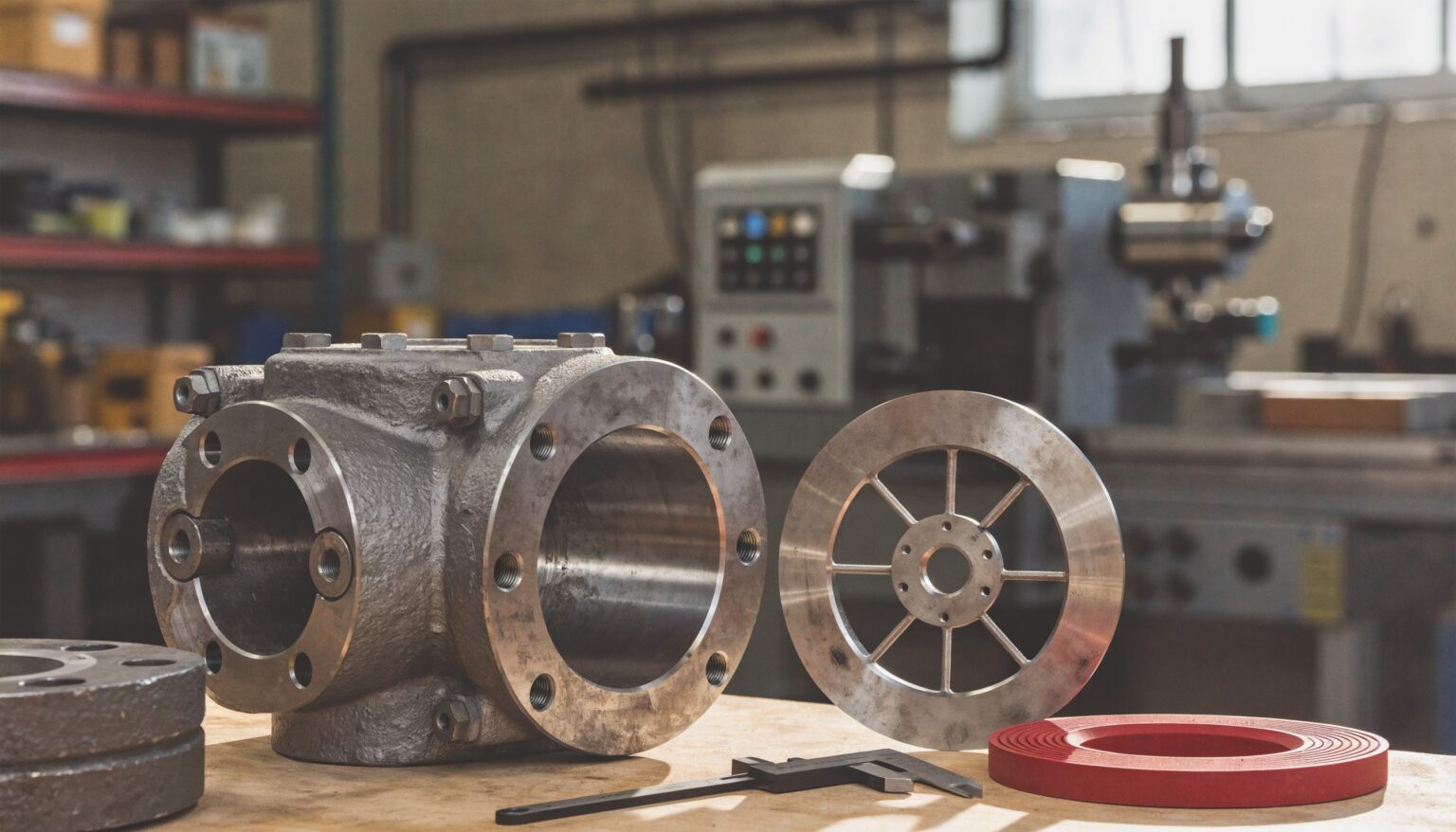
Eine Siegwart Absperrklappe in einer bestehenden Anlage ist jahrzehntelang kein Thema – bis sie eines wird. Dann stehen Sie vor einer Armatur, deren Fabrikat es in dieser Form nicht mehr gibt, und müssen innerhalb weniger Tage entscheiden: Ersatzteil beschaffen, Sitz und Scheibe nacharbeiten lassen oder gegen ein lieferbares Fabrikat tauschen. Dieser Beitrag geht die Entscheidung so durch, wie sie im Betrieb tatsächlich getroffen wird – an den Maßen, die am Flansch hängen, an der Antriebsschnittstelle, am Werkstoff und an der Frage, was ein Tag Stillstand kostet.
Warum eine Siegwart Absperrklappe zum Entscheidungsfall wird
Armaturen aus den 1970er- und 1980er-Jahren stehen in österreichischen Kraftwerken, Fernwärmenetzen und Industrieanlagen noch zu Tausenden in Betrieb. Das ist kein Versäumnis, sondern ein Hinweis darauf, dass sie damals richtig ausgelegt wurden. Schwierig wird es erst, wenn eine davon ausfällt oder bei der Revision auffällt: Sitzleckage, Riefen auf der Dichtfläche, eine Spindel mit Spiel, ein Antrieb, der das Losbrechmoment nicht mehr überwindet.
Der Unterschied zu einer aktuellen Armatur liegt nicht in der Technik, sondern in der Versorgungslage. Bei einem Fabrikat, das heute noch gefertigt wird, ruft man die Ersatzteilliste ab und bestellt Sitzring, Lager und Packung. Bei einer Klappe aus einem Programm, das seit Jahrzehnten nicht mehr fortgeführt wird, gibt es diesen Weg häufig nicht mehr. Damit verschiebt sich die Frage von „welches Ersatzteil“ auf „welcher Weg“.
Dasselbe gilt für andere Bestandsfabrikate, die in österreichischen Anlagen häufig verbaut sind – etwa Armaturen der Siepmann-Werke, von Friedrich Krombach, Nieruf oder Fred Abel. Es sind keine Mitbewerber, sondern Bestandsarmaturen: technisch in Ordnung, aber ohne durchgängige Ersatzteilversorgung.
Drei Wege aus dem Stillstand
- Ersatzteil beschaffen. Der kürzeste Weg, wenn er funktioniert. Sitzring, Wellenlager, Packung und Dichtungen sind bei älteren Klappen oft noch als Zeichnungsteil herstellbar. Voraussetzung: verwertbare Maße, also eine Zeichnung, ein Typenschild oder eine vermessene Altarmatur.
- Nacharbeiten lassen. Sitzfläche und Scheibe werden überdreht oder aufgeschweißt und neu bearbeitet, Lagerstellen werden gebuchst. Das Gehäuse bleibt in der Leitung oder kommt kurz heraus. Sinnvoll, solange der Verschleiß auf den Dichtbereich begrenzt ist.
- Gegen ein lieferbares Fabrikat tauschen. Die neue Klappe muss ohne Änderung an der Rohrleitung passen, sonst wird aus dem Armaturentausch ein Rohrleitungsprojekt. Genau darum geht es in den nächsten Abschnitten.
Welcher Weg der richtige ist, entscheidet sich an vier Größen: Einbaulänge und Anschlussmaß, Antriebsschnittstelle, Nennweite/Druckstufe/Werkstoff und dem Verhältnis von Lieferzeit zu Stillstandzeit. Alles andere folgt daraus.
Einbaulänge und Anschlussmaß: passt der Ersatz ohne Rohrleitungsänderung?
Die erste Messung ist die wichtigste: Wie viel Platz gibt die Leitung zwischen den Flanschen her? Bei Absperrklappen unterscheidet man die Zwischenflansch-Ausführung (wafer), die Anflansch-Ausführung (lug) und die Doppelflansch-Klappe. Die drei Bauarten haben deutlich verschiedene Baulängen – eine Doppelflansch-Klappe lässt sich nicht in den Spalt einer Zwischenflansch-Klappe setzen, und umgekehrt fehlt der Wafer-Klappe die Verschraubungsmöglichkeit, wenn nur einseitig angeflanscht wird.
Die Baulängenreihen nach EN 558 und die Flanschmaße nach EN 1092 sind dabei der gemeinsame Bezug, auf den sich Bestand und Ersatz zurückführen lassen – als Information, nicht als Auswahlkriterium für sich. Vier Maße sollten Sie vor jedem Gespräch vorliegen haben:
- Baulänge Flanschfläche zu Flanschfläche in Millimetern, gemessen und nicht geschätzt
- Lochkreis, Lochzahl und Schraubendurchmesser des Gegenflansches
- Nennweite und Druckstufe, am besten vom Typenschild und zusätzlich am Rohr nachgemessen
- Einbaulage und Richtung der Welle, weil davon der freie Raum für den Aufbau abhängt
Passen diese Maße, ist der Tausch gegen eine aktuelle Absperrklappe in der Regel der schnellere Weg als die Nacharbeit. Passen sie nicht, kommt ein Zwischenstück oder eine Sonderbaulänge ins Spiel – und damit ein Termin, der sich nicht mehr in ein Wochenendfenster legen lässt.
Die Antriebsschnittstelle entscheidet, ob der Aufbau bleibt
Häufig ist nicht die Klappe das Problem, sondern der Antrieb darauf – oder umgekehrt: Der Antrieb ist neu und soll bleiben. Die Schnittstelle dazwischen ist der Anschlussflansch nach ISO 5211 mit Flanschgröße, Wellenprofil und Wellenlänge. Zu prüfen sind:
- Flanschgröße und Lochbild am Armaturenhals
- Wellenprofil: Vierkant, Zweiflach oder Passfederverbindung, jeweils mit Maß
- erforderliches Drehmoment im Betriebspunkt, nicht nur im drucklosen Zustand
- Art der Betätigung: Handbetätigung, elektrisch, pneumatisch oder hydraulisch
- Stellungsrückmeldung und Endlagen, wenn die Klappe in eine Steuerung eingebunden ist
Stimmen Flanschgröße und Wellenprofil, kann ein vorhandener Antrieb oft auf die neue Armatur übernommen werden. Das verkürzt die Lieferzeit und erspart die Neuparametrierung in der Leittechnik. Stimmen sie nicht, ist ein Zwischenstück üblich – es braucht aber mehr Bauhöhe, und die Bauhöhe ist in engen Rohrkellern oft die eigentliche Grenze.
Nennweite, Druckstufe und Werkstoff des Bestands richtig ablesen
Alte Typenschilder sind zugewachsen, überlackiert oder fehlen ganz. Dann wird aus der Anlage rückgeschlossen: Medium, Betriebsdruck, Temperatur und Rohrwerkstoff ergeben zusammen den Rahmen, in dem die Ersatzarmatur liegen muss. Aktuelle Absperrklappen deckt der Bestand von DN 65 bis DN 2500 und PN 10 bis PN 160 ab; als Gehäusewerkstoffe kommen je nach Anwendung EN-GJL-250, P250GH, GP240GH+N, 13CrMo44, G17CrMo5-5 sowie Edelstähle in Frage.
Zwei Punkte werden dabei regelmäßig unterschätzt. Erstens die Temperatur: Eine Klappe, die in Heißdampf oder in einem Wärmeträgerölkreis sitzt, braucht einen anderen Sitz und eine andere Spindelabdichtung als dieselbe Nennweite in Kühlwasser. Zweitens die Dichtheitsanforderung: weichdichtend schließt dicht, verträgt aber weniger Temperatur; metallisch dichtend hält mehr aus und lässt eine definierte Restleckage zu. Welche Anforderung tatsächlich gilt, steht im R&I-Schema oder im Betriebshandbuch – nicht im Bauchgefühl.
Ist die Armatur im Bestand gar keine Klappe, sondern ein Schieber, gilt derselbe Ablauf mit anderen Maßen. Die Übersicht zu den Absperrschiebern zeigt, welche Bauformen, Nennweiten und Werkstoffe dafür heute lieferbar sind.
Was die Nacharbeit leisten kann – und wo sie endet
Nacharbeit ist der Weg, wenn das Gehäuse gut und der Verschleiß örtlich begrenzt ist. Sitzfläche überdrehen, Scheibe aufschweißen und neu bearbeiten, Lagerstellen buchsen, Packung und Wellendichtung erneuern – das bringt eine Klappe zurück in den Betrieb, ohne die Leitung anzutasten.
Sie endet an drei Stellen. Erstens bei der Wandstärke: Liegt die gemessene Restwandstärke unter dem zulässigen Wert, ist die Diskussion beendet. Zweitens bei Rissen im Gehäuse oder im Übergang zum Hals – hier hilft keine Bearbeitung. Drittens bei der Wirtschaftlichkeit: Ab einer gewissen Anzahl Arbeitsgänge kostet die Aufarbeitung mehr als die neue Armatur, ohne deren Lebensdauer zu erreichen. Diese Grenze lässt sich nicht pauschal angeben, aber sie lässt sich vor der Zerlegung abschätzen: Unsere eigene Serviceabteilung beurteilt Zustand und Aufwand vor Ort an der Anlage und sagt, welcher der drei Wege bei dieser Armatur der kürzere ist.
Lieferzeit gegen Stillstandzeit rechnen
Die Zahl, die die Entscheidung am häufigsten kippt, ist nicht der Armaturenpreis, sondern die Stillstandzeit. Rechnen Sie in dieser Reihenfolge:
- Wie lange kann die Leitung tatsächlich außer Betrieb bleiben – Stunden im Revisionsfenster oder Tage?
- Wie lange dauert Zerlegung, Vermessung und Wiedermontage unabhängig davon, welcher Weg gewählt wird?
- Welche Lieferzeit hat ein Ersatzteil aus einer Zeichnung, welche eine aufgearbeitete Armatur, welche eine lieferbare neue?
- Gibt es eine Umfahrung oder eine zweite Schiene, die den Druck aus dem Termin nimmt?
Passt eine lieferbare Klappe maßlich, ist sie meist auch die planbarere Variante: fixer Liefertermin, bekanntes Drehmoment, dokumentierte Prüfung. Passt sie nicht, ist Nacharbeit der Weg, weil sie das Maßproblem gar nicht erst erzeugt. Und wenn beide Wege gleich lang sind, gibt die Frage den Ausschlag, wie viele gleichartige Armaturen noch in der Anlage stehen: Bei zwölf Klappen desselben Typs lohnt sich ein Ersatzkonzept, bei einer einzelnen nicht.
Wenn im Bestand gemischte Fabrikate stehen
In gewachsenen Anlagen liegt selten ein einziges Fabrikat. Neben Absperrklappen hängen Rückschlagventile, Schmutzfänger, Schaugläser und Sonderarmaturen in derselben Leitung, oft aus drei Jahrzehnten und von fünf Herstellern. Für die Ersatzfrage ist das kein Nachteil, solange man sie einmal geordnet stellt: Welche Armaturen sind maßlich austauschbar, welche brauchen ein Zeichnungsteil, welche kann man beim nächsten Stillstand gleich mit erledigen? Eine Übersicht der diversen Armaturen zeigt, welche dieser Positionen heute als Serienteil zu bekommen sind.
Wer die Anlage nicht in Österreich, sondern in Tschechien, der Slowakei, Ungarn, Slowenien oder Italien betreibt, findet im Vertriebsgebiet, wo die Serviceabteilung tätig ist.
Häufige Fragen
Woran erkenne ich, welches Fabrikat in der Leitung sitzt?
Am Typenschild, am Gussschriftzug im Gehäuse und an der Form des Halses. Fehlt beides, hilft ein Foto der eingebauten Armatur samt Maßband im Bild, dazu Baulänge, Lochkreis und Wellenprofil. Aus diesen Angaben lässt sich in den meisten Fällen die Bauart eingrenzen, auch ohne Herstellernamen.
Gibt es für eine alte Siegwart Absperrklappe noch Ersatzteile?
Nicht als Katalogteil, aber häufig als Zeichnungsteil: Sitzring, Buchsen, Packung und Dichtungen lassen sich nach Maß fertigen, wenn die Altarmatur vermessen werden kann. Bei Scheibe und Welle ist die Grenze oft eher wirtschaftlich als technisch.
Muss die Rohrleitung geändert werden, wenn ich auf ein anderes Fabrikat wechsle?
In der Regel nicht, sofern Baulänge, Flanschbild und Bauhöhe passen. Genau deshalb wird vor dem Angebot gemessen und nicht geschätzt. Wo ein Maß fehlt, gibt es Zwischenstücke und Sonderbaulängen – sie kosten Bauhöhe oder Zeit, lösen das Problem aber ohne Schweißarbeit an der Leitung.
Kann der vorhandene Antrieb weiterverwendet werden?
Wenn Flanschgröße nach ISO 5211, Wellenprofil und Drehmoment zusammenpassen, ja. Zu prüfen ist zusätzlich, ob die Endlagen neu eingestellt werden müssen und ob die Stellungsrückmeldung zur Leittechnik weiterhin stimmt.
Was ist bei metallisch dichtenden Klappen anders?
Sie vertragen höhere Temperaturen und Feststoffanteile, lassen dafür eine definierte Restleckage zu. Beim Ersatz einer weichdichtenden Klappe durch eine metallisch dichtende ändert sich damit die Dichtheitsklasse – das muss zur Aufgabe in der Anlage passen und nicht nur zum Einbaumaß.
Fazit
Bei einer Siegwart Absperrklappe im Bestand entscheidet nicht der Herstellername, sondern eine Handvoll Maße: Baulänge, Flanschbild, Antriebsschnittstelle, Nennweite, Druckstufe und Werkstoff. Liegen sie auf dem Tisch, lässt sich in einem Gespräch klären, ob das Ersatzteil, die Nacharbeit oder die lieferbare Armatur der kürzere Weg ist. Liegen sie nicht vor, wird geraten – und das kostet im Stillstand mehr als jede Armatur. Wer die vier Maße vor der Revision erhebt, hat die Entscheidung schon halb getroffen.
Replacing a Siegwart butterfly valve: spare part, refurbishment or a currently available make
A Siegwart butterfly valve installed in an existing plant causes no trouble for decades – until it does. At that point you are standing in front of a valve whose make is no longer produced in this form, and you have a few days to decide: source a spare part, have seat and disc reworked, or replace the valve with a make that is available today. This section follows the same decision as the German text above, in the order it is actually made on site: the dimensions fixed by the flanges, the actuator interface, the material, and the cost of one day of downtime.
Why an old butterfly valve becomes a decision rather than a repair
Valves from the 1970s and 1980s are still in service by the thousand in Austrian power stations, district heating networks and industrial plants. That is not neglect; it indicates they were correctly specified in the first place. The problem starts when one of them fails or is flagged during an overhaul: seat leakage, scoring on the sealing face, play in the shaft, an actuator that no longer overcomes the breakaway torque.
The difference compared with a current valve is not technical, it is a question of supply. For a make still in production you call up the spare parts list and order seat ring, bearings and packing. For a valve from a programme that was discontinued decades ago that route often no longer exists. The question therefore shifts from “which spare part” to “which route”.
The same applies to other makes commonly found in existing Austrian plants, such as valves by Siepmann-Werke, Friedrich Krombach, Nieruf or Fred Abel. These are not competitors, they are installed assets: technically sound, but without a continuous spare parts supply.
Three routes out of the shutdown
The first route is the spare part. Seat ring, shaft bearings, packing and gaskets can often still be produced to drawing for older valves, provided there are usable dimensions – a drawing, a legible nameplate or a valve that can be measured once removed.
The second route is refurbishment. The sealing face is re-machined, the disc is welded up and re-cut, bearing positions are re-bushed, packing and shaft seal are renewed. The body stays in the line or comes out only briefly. This works as long as the wear is confined to the sealing area.
The third route is replacement with a currently available make. Here the new valve has to fit without any modification to the piping, otherwise a valve exchange turns into a piping project. That is what the following paragraphs are about.
Face-to-face length and flange pattern
The first measurement is the most important one: how much space does the line allow between the flanges? Butterfly valves come as wafer type, lug type and double flanged type, and the three designs differ considerably in face-to-face length. A double flanged valve cannot be fitted into the gap left by a wafer valve, and a wafer valve lacks the bolting option if only one side is flanged.
The face-to-face series to EN 558 and the flange dimensions to EN 1092 provide the common reference to which both the installed valve and its replacement can be traced – as information, not as a selling point in itself. Four dimensions should be on the table before any discussion: face-to-face length in millimetres, measured rather than estimated; bolt circle, number of holes and bolt diameter of the mating flange; nominal size and pressure rating, taken from the nameplate and checked against the pipe; and the installed orientation of the shaft, because the space available for the actuator depends on it.
If those dimensions match, replacing the valve with a currently available butterfly valve is usually quicker than refurbishment. If they do not, a spacer or a special face-to-face length comes into play – and with it a schedule that no longer fits into a weekend window.
The actuator interface decides whether the actuator can stay
Often it is not the valve that is the problem but the actuator on top of it – or the other way round: the actuator is new and is meant to stay. The interface between them is the mounting flange to ISO 5211, with flange size, shaft profile and shaft length. What needs checking is the flange size and hole pattern on the valve neck, the shaft profile (square, double-D or key connection, each with its dimension), the torque required at the operating point rather than in the depressurised state, the type of operation (manual, electric, pneumatic or hydraulic), and the position feedback and end positions if the valve is tied into a control system.
If flange size and shaft profile match, an existing actuator can frequently be carried over to the new valve. That shortens the delivery time and avoids re-parameterising the control system. If they do not match, a spacer is common practice – but it adds height, and in cramped pipe basements the overall height is often the real limit.
Reading nominal size, pressure rating and material from the installed valve
Old nameplates are overgrown, painted over or missing altogether. In that case the data is inferred from the plant: medium, operating pressure, temperature and pipe material together define the envelope the replacement valve has to sit in. Current butterfly valves cover DN 65 to DN 2500 and PN 10 to PN 160; depending on the application, body materials include EN-GJL-250, P250GH, GP240GH+N, 13CrMo44, G17CrMo5-5 and stainless steels.
Two points are regularly underestimated. The first is temperature: a valve in superheated steam or in a thermal oil circuit needs a different seat and a different stem sealing arrangement than the same nominal size in cooling water. The second is the tightness requirement: a resilient seated valve closes tight but tolerates less temperature, while a metal seated valve withstands more and permits a defined residual leakage. Which requirement actually applies is stated in the P&I diagram or the operating manual.
What refurbishment can achieve, and where it stops
Refurbishment is the right route when the body is sound and the wear is local. Re-machining the seat, welding up and re-cutting the disc, re-bushing bearing positions, renewing packing and shaft seal – that brings a valve back into service without touching the line.
It stops in three places. First at wall thickness: if the measured remaining wall thickness is below the permissible value, the discussion is over. Second at cracks in the body or in the transition to the neck, where machining does not help. Third at commercial viability: beyond a certain number of operations the refurbishment costs more than a new valve without reaching its service life. That limit cannot be stated in general terms, but it can be assessed before dismantling – our own service department assesses condition and effort on site at the plant.
Weighing delivery time against downtime
The figure that most often decides the case is not the price of the valve but the downtime. Work through it in this order: how long can the line realistically stay out of service, hours within an overhaul window or days? How long do dismantling, measuring and reassembly take, regardless of the route chosen? What is the delivery time for a part made to drawing, for a refurbished valve, and for an available new one? And is there a bypass or a second train that takes the pressure off the date?
If an available valve fits dimensionally, it is usually also the more predictable option: a fixed delivery date, a known torque, documented testing. If it does not fit, refurbishment is the route, because it never creates the dimensional problem in the first place. And where both routes take equally long, the deciding question is how many identical valves are still installed: with twelve valves of the same type a spare parts concept pays off, with a single one it does not.
Frequently asked questions
How do I identify which make is installed in the line?
From the nameplate, the cast lettering on the body and the shape of the neck. If both are missing, a photograph of the installed valve with a tape measure in the frame helps, together with face-to-face length, bolt circle and shaft profile. In most cases the design can be narrowed down from that, even without a manufacturer name.
Are spare parts still available for an old Siegwart butterfly valve?
Not as a catalogue item, but frequently as a part made to drawing: seat ring, bushings, packing and gaskets can be produced to measure if the existing valve can be measured. For disc and shaft the limit is usually commercial rather than technical.
Does the piping have to be modified when changing to a different make?
As a rule no, provided face-to-face length, flange pattern and overall height match. That is precisely why measurements are taken before a quotation rather than estimated. Where a dimension is missing, spacers and special face-to-face lengths are available; they cost height or time, but they solve the problem without welding work on the line.
Can the existing actuator be reused?
Yes, if the ISO 5211 flange size, the shaft profile and the torque match. It should also be checked whether the end positions need to be reset and whether the position feedback to the control system is still correct.
What is different about metal seated valves?
They tolerate higher temperatures and solids content, but permit a defined residual leakage. Replacing a resilient seated valve with a metal seated one therefore changes the tightness class, which has to suit the duty in the plant and not only the installation dimension.
Conclusion
With a Siegwart butterfly valve in an existing plant, the decision is not driven by the manufacturer name but by a handful of dimensions: face-to-face length, flange pattern, actuator interface, nominal size, pressure rating and material. Once those are on the table, a single conversation is enough to establish whether the spare part, the refurbishment or the available valve is the shorter route. Without them, it is guesswork – and during a shutdown guesswork costs more than any valve. Anyone who records those dimensions before the overhaul has already made half the decision.
