
Regelventil-Typen: Durchgangs-, Eck- oder Dreiwegeventil und Regler ohne Hilfsenergie – welche Bauform wofür
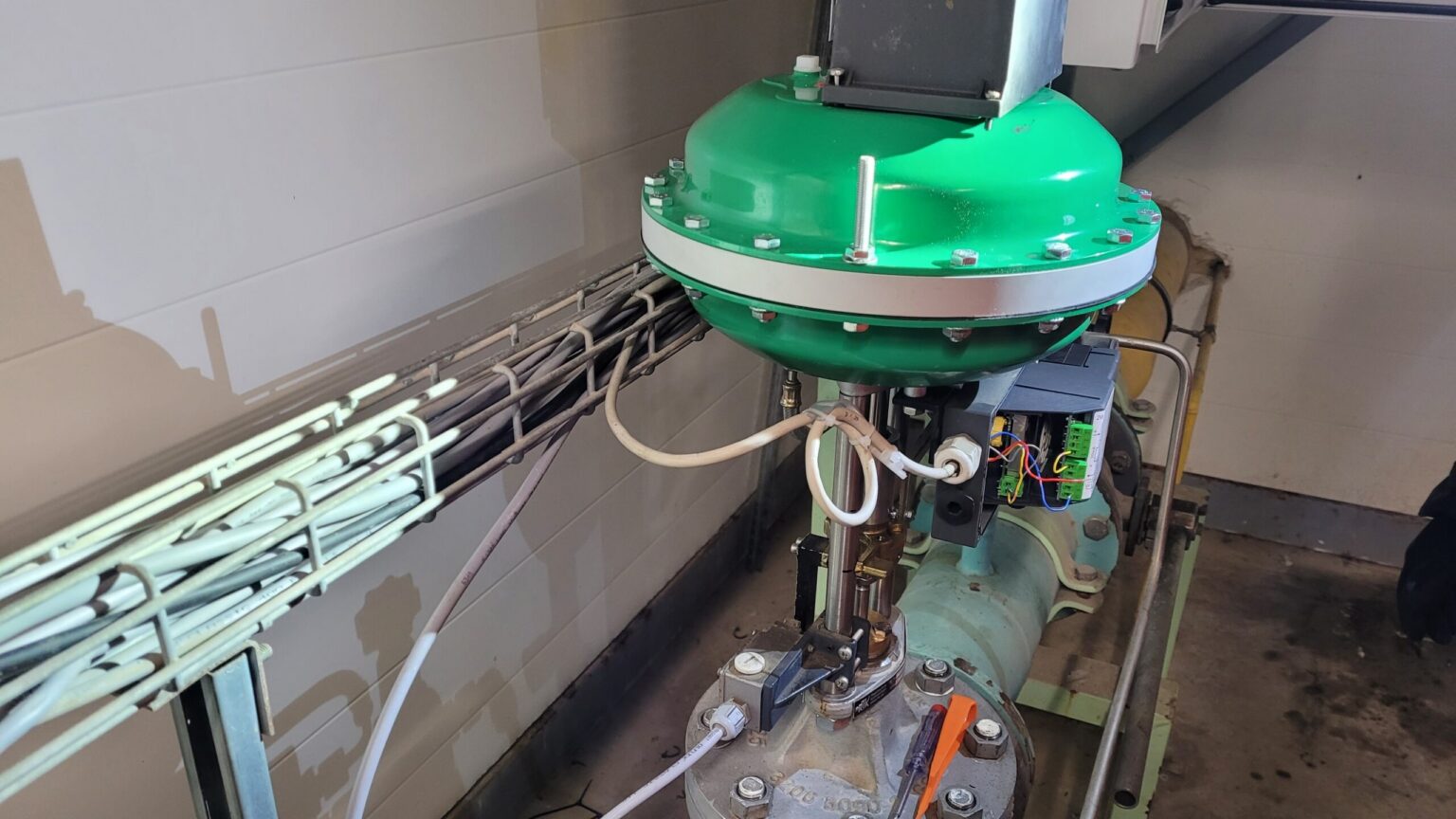
Wer ein Regelventil anfragt, schreibt meist Nennweite, Druckstufe und Medium in die Anfrage – und überlässt die Frage nach der Bauform dem Lieferanten. Dabei entscheidet gerade die Bauform, ob die Regelung später ruhig läuft, ob das Gehäuse nach zwei Heizperioden ausgewaschen ist oder ob ein Dreiwegeventil gegen die Strömung arbeitet. Dieser Beitrag ordnet die gängigen Regelventil-Typen ein: Durchgangsventil, Eckventil, Dreiwegeventil, Regler ohne Hilfsenergie und die Sonderbauformen aus dem Kesselhaus. Am Ende wissen Sie, welche Bauform zu Ihrer Regelaufgabe passt und welche Angaben Sie dafür in die Anfrage schreiben.
Regelventil-Typen im Überblick: vier Fragen vor der Bauform
Bevor es um Gehäuseformen geht, lohnt sich ein Blick auf die Aufgabe. Vier Fragen trennen die Regelventil-Typen schon vor jedem Datenblatt sauber voneinander:
- Was wird geregelt? Druck, Durchfluss, Temperatur oder ein Füllstand. Eine Temperaturregelung über Mischen braucht eine andere Bauform als eine Druckreduzierung.
- Wie viele Stränge sind beteiligt? Ein Eingang und ein Ausgang führen zum Durchgangs- oder Eckventil, zwei Eingänge oder zwei Ausgänge zum Dreiwegeventil.
- Wie groß ist die Druckdifferenz, und was macht das Medium dabei? Heißes Kondensat oder Speisewasser kann im Ventil ausdampfen, Wasser bei hohem Differenzdruck kavitieren. Das entscheidet über Eckform, Kegelform und Werkstoff.
- Steht Hilfsenergie zur Verfügung? Druckluft oder Strom und ein Signal aus der Leittechnik – oder soll das Ventil allein mit der Energie des Mediums arbeiten?
Die Antworten auf diese vier Fragen führen in den meisten Fällen bereits zu einer Bauform. Die genaue Größe ergibt sich danach aus der Auslegung über den Kvs-Wert, die wir im Beitrag Regelventil auslegen beschrieben haben.
Durchgangsventil: der Standard für Druck, Menge und Temperatur
Das Durchgangsventil ist die häufigste Bauform. Eintritt und Austritt liegen in einer Achse, das Medium wird im Gehäuse zum Sitz umgelenkt und strömt danach wieder in Leitungsrichtung weiter. Innerhalb dieser Bauform gibt es mehrere Varianten, die für die Praxis wichtiger sind als die Gehäuseform selbst:
- Einsitzventil: ein Kegel, ein Sitz. Es schließt am dichtesten und ist die Wahl, wenn das Ventil in Zu-Stellung auch absperren soll. Bei großen Nennweiten und hohen Differenzdrücken braucht es allerdings einen kräftigen Antrieb, weil der Druck voll auf den Kegel wirkt.
- Druckentlasteter Kegel: eine Bohrung im Kegel und eine Abdichtung zum Gehäuse gleichen die Kräfte weitgehend aus. Der Antrieb bleibt klein, die Leckrate in Zu-Stellung ist dafür etwas höher als beim unentlasteten Einsitzventil.
- Käfigventil: der Kegel wird in einem Käfig geführt, die Durchflussöffnungen im Käfig bestimmen die Kennlinie. Käfigventile laufen bei hohen Differenzdrücken ruhig und lassen sich mit mehrstufigen Käfigen gegen Kavitation und Geräusch auslegen.
Für Dampf, Heißwasser und Thermalöl in Kraftwerk und Industrie ist das Durchgangsventil der Normalfall. Welche Kennlinie – linear oder gleichprozentig – dazu passt, hängt vom Verhalten der Strecke ab und ist im Beitrag Regelventil-Kennlinie erklärt. Die Ausführungen, die wir führen, finden Sie unter Regelventile: DN 15 bis DN 600, PN 10 bis PN 630, aus Grauguss, P250GH, GP240GH+N, 13CrMo44, G17CrMo5-5 oder Edelstahl.
Eckventil: wenn das Medium ausdampft oder Feststoffe mitbringt
Beim Eckventil tritt das Medium seitlich ein und in Achsrichtung des Kegels wieder aus. Das klingt nach einer Frage des Rohrleitungsverlaufs, ist aber vor allem eine Frage der Strömung hinter dem Sitz. Der Strahl verlässt das Ventil gerade nach unten und trifft nicht auf eine Gehäusewand. Ausdampfung und Kavitationsblasen fallen dadurch zum Großteil im nachfolgenden Rohr zusammen, nicht im Gehäuse.
Typische Einsatzfälle sind deshalb:
- Niveauregelung von heißem Kondensat, das hinter dem Ventil teilweise zu Entspannungsdampf wird,
- Entspannung von Speisewasser oder Kesselwasser mit großem Druckgefälle,
- Medien mit Feststoffanteil, die sich in einem Durchgangsgehäuse ablagern würden.
Wichtig für die Planung: Das Rohr direkt hinter dem Eckventil ist die Stelle, an der der Verschleiß stattfindet. Ein gerader Auslauf ohne unmittelbar folgenden Bogen und ein erosionsfester Werkstoff an dieser Stelle verlängern die Standzeit deutlich mehr als jede Änderung am Ventil selbst.
Dreiwegeventil: mischen oder verteilen – und nie verwechseln
Ein Dreiwegeventil hat drei Anschlüsse und regelt das Verhältnis zweier Teilströme. Es gibt zwei Ausführungen, die von außen ähnlich aussehen und sich im Inneren grundlegend unterscheiden:
- Mischventil: zwei Eingänge, ein gemeinsamer Ausgang. Typisch für Vorlauftemperaturen, bei denen heißes Wasser mit Rücklaufwasser gemischt wird.
- Verteilventil: ein Eingang, zwei Ausgänge. Typisch für Bypass-Schaltungen, etwa wenn ein Teil des Stroms an einem Wärmetauscher vorbeigeführt wird.
Ein Mischventil, das als Verteiler eingebaut wird, wird am Kegel gegen die vorgesehene Richtung angeströmt. Die Folge sind Schläge in Schließnähe, instabile Regelung und mechanische Schäden. Deshalb gehört die Funktion – mischend oder verteilend – ausdrücklich in die Anfrage, ebenso das Temperaturniveau beider Stränge. Bei großen Temperaturunterschieden zwischen den Eingängen braucht das Gehäuse zudem eine Ausführung, die die Wärmespannungen aufnimmt.
Regler ohne Hilfsenergie: Druckminderer, Überströmer, Temperaturregler
Regler ohne Hilfsenergie arbeiten allein mit der Energie des Mediums. Eine Membran oder ein Faltenbalg vergleicht den Ist-Druck mit einer Feder, die den Sollwert vorgibt, und verstellt den Kegel direkt. Beim Temperaturregler übernimmt ein Fühler mit Kapillarleitung diese Aufgabe. Drei Varianten sind in Industrieanlagen besonders häufig:
- Druckminderer halten den Druck hinter dem Ventil konstant, etwa bei der Versorgung eines Niederdruck-Dampfnetzes.
- Überström- oder Vordruckregler halten den Druck vor dem Ventil konstant und öffnen, wenn er steigt.
- Temperaturregler regeln die Dampf- oder Heizmittelzufuhr zu einem Wärmetauscher direkt nach der Medientemperatur.
Der Vorteil liegt auf der Hand: Es gibt keinen Antrieb, keine Verkabelung, kein Positioniersignal, und bei Stromausfall regelt das Ventil weiter. Die Grenzen sind genauso klar. Regler ohne Hilfsenergie sind Proportionalregler: Mit steigender Last weicht der Ist-Wert etwas vom Sollwert ab. Sie lassen sich nicht aus der Leittechnik verstellen und melden keine Stellung zurück. Und sie ersetzen kein Sicherheitsventil – ein Druckminderer schützt das nachfolgende Netz nicht gegen Überdruck, wenn er klemmt. Wo enge Toleranzen, eine Fernverstellung oder eine Aufzeichnung gefordert sind, ist ein Regelventil mit Antrieb die richtige Wahl.
Sonderbauformen im Kesselhaus
Rund um Dampfkessel gibt es Regelaufgaben, für die eigene Bauformen entstanden sind. Drei davon führt die Ing. Wilhelm Friedrich Gesellschaft m. b. H. unter den Regelventilen:
- Speisewasser-Regelventil mit integriertem Pumpenfreilauf: Es regelt die Speisewassermenge zum Kessel und öffnet bei kleiner Last automatisch eine Mindestmengenleitung, damit die Speisepumpe nicht gegen ein geschlossenes Ventil läuft. Wann sich das integrierte Ventil gegenüber einer getrennten Mindestmengenleitung lohnt, steht im Beitrag HORA Pumpenschutz.
- Absalzventil: Es entnimmt kontinuierlich eine kleine Menge Kesselwasser, damit die Salzkonzentration einen Grenzwert nicht überschreitet. Geregelt wird meist nach der elektrischen Leitfähigkeit.
- Abschlammventil: Es öffnet stoßweise für wenige Sekunden, damit der Schlamm am Kesselboden mit hoher Geschwindigkeit ausgetragen wird. Gefordert sind ein schnelles Öffnen und Schließen und ein Sitz, der den Feststoffstrom aushält.
Eine weitere Sonderform ist das Dampfumformventil, das Druck und Temperatur von Dampf in einem Gehäuse reduziert. Es gehört zur Dampfumformtechnik; wann es eine Kombination aus Druckreduzierventil und Einspritzkühler ersetzt, beschreibt der Beitrag Dampfumformstation.
Regelventil oder Regelklappe?
Ab einer gewissen Nennweite stellt sich die Frage, ob überhaupt ein Ventil das richtige Stellglied ist. Regelklappen haben bei großen Nennweiten und kleinen Druckdifferenzen klare Vorteile: geringes Gewicht, kurze Baulänge, großer Durchfluss bei wenig Druckverlust. Regelventile spielen ihre Stärken bei hohen Differenzdrücken, kleinen Durchflüssen und dort aus, wo fein und stabil geregelt werden muss. Für Luft, Rauchgas und große Kühlwassermengen ist die Klappe oft die bessere Lösung, für Hochdruckdampf und Speisewasser das Ventil. Die Klappen-Seite unseres Sortiments finden Sie unter Drossel- und Regelklappen, die Abwägung im Detail im Beitrag Regelklappe oder Regelventil.
Antrieb und Sicherheitsstellung gehören zur Bauform dazu
Die Wahl des Antriebs wird oft getrennt vom Ventil betrachtet. In der Praxis hängt beides eng zusammen, weil die Sicherheitsstellung bei Ausfall der Hilfsenergie Teil der Regelaufgabe ist:
- Pneumatische Antriebe mit Federrückstellung fahren bei Luftausfall in eine definierte Stellung – offen oder geschlossen, je nach Feder. Sie stellen schnell und sind robust.
- Elektrische Antriebe brauchen keine Druckluft. Ist eine Sicherheitsstellung gefordert, braucht es eine Federrücklauf-Ausführung oder einen Energiespeicher.
- Elektrohydraulische Antriebe verbinden hohe Stellkräfte mit einer Sicherheitsfunktion und sind bei großen Ventilen mit hohen Differenzdrücken verbreitet. Die Ing. Wilhelm Friedrich Gesellschaft m. b. H. führt dafür Motor-Regelventile mit Fail-Safe-Funktion.
Für die Anfrage heißt das: Neben Medium, Druck, Temperatur und Durchfluss gehört immer dazu, in welche Stellung das Ventil bei Ausfall von Strom oder Luft fahren soll – und warum.
Häufige Fragen zu Regelventil-Typen
Welcher Regelventil-Typ ist der richtige für Dampf?
Für die Regelung von Dampfmenge oder Dampfdruck ist das Einsitz-Durchgangsventil der Normalfall, bei hohen Differenzdrücken mit druckentlastetem Kegel oder Käfigführung. Für einfache Druckreduzierungen ohne Anbindung an die Leittechnik genügt oft ein Druckminderer ohne Hilfsenergie.
Wann brauche ich ein Eckventil statt eines Durchgangsventils?
Wenn das Medium hinter dem Ventil ausdampft, stark kavitiert oder Feststoffe mitführt – typisch bei heißem Kondensat, Speisewasser-Entspannung und Abschlammung.
Kann ich ein Dreiwege-Mischventil auch zum Verteilen einsetzen?
Nur, wenn der Hersteller die Ausführung dafür freigibt. Ein Mischventil in Verteilfunktion wird gegen die vorgesehene Richtung angeströmt und neigt zu Schlägen in Schließnähe.
Ist ein Regler ohne Hilfsenergie ungenauer als ein Regelventil mit Antrieb?
Er regelt proportional, der Ist-Wert weicht mit steigender Last etwas vom Sollwert ab. Für viele Versorgungsaufgaben ist das unerheblich; wo enge Toleranzen gefordert sind, ist ein Regelventil mit Stellungsregler die bessere Wahl.
Fazit: erst die Regelaufgabe, dann die Bauform
Die Regelventil-Typen unterscheiden sich weniger durch ihr Aussehen als durch die Aufgabe, für die sie gemacht sind. Durchgangsventile decken den Großteil der Anwendungen ab, Eckventile die heißen und ausdampfenden Medien, Dreiwegeventile das Mischen und Verteilen, Regler ohne Hilfsenergie die einfachen Versorgungsaufgaben, und im Kesselhaus kommen Speisewasser-, Absalz- und Abschlammventile dazu. Wer Regelaufgabe, Druckdifferenz, Medium und Sicherheitsstellung in die Anfrage schreibt, bekommt ein Ventil, das passt. Die Ing. Wilhelm Friedrich Gesellschaft m. b. H. vertritt in Österreich exklusiv RTK Regeltechnik und HORA Holter Regelarmaturen und unterstützt Sie über die eigene Serviceabteilung auch bei Inbetriebnahme und Instandsetzung.
Control valve types: globe, angle or three-way valve and self-operated regulators – which design for which control task
Anyone requesting a control valve usually puts nominal size, pressure rating and medium into the enquiry – and leaves the question of the design to the supplier. Yet it is precisely the design that decides whether the control loop will run smoothly later, whether the body is washed out after two heating seasons or whether a three-way valve works against the flow. This article sorts the common control valve types: globe valve, angle valve, three-way valve, self-operated regulator and the special designs used in the boiler house. At the end you will know which design fits your control task and which information to put into your enquiry.
Control valve types at a glance: four questions before the design
Before talking about body shapes, it pays to look at the task. Four questions separate the control valve types cleanly, before any data sheet is opened:
- What is being controlled? Pressure, flow, temperature or a level. Temperature control by mixing needs a different design from pressure reduction.
- How many lines are involved? One inlet and one outlet lead to a globe or angle valve, two inlets or two outlets to a three-way valve.
- How large is the pressure drop, and what does the medium do across it? Hot condensate or feedwater can flash inside the valve, water at high differential pressure can cavitate. This decides on angle body, plug design and material.
- Is auxiliary energy available? Compressed air or power and a signal from the control system – or should the valve work with the energy of the medium alone?
In most cases the answers to these four questions already point to one design. The exact size then follows from sizing via the Kvs value, which we described in the article sizing a control valve (German).
Globe valve: the standard for pressure, flow and temperature
The straight-through globe valve is the most common design. Inlet and outlet lie on one axis; inside the body the medium is turned towards the seat and then continues in the direction of the pipe. Within this design there are several variants that matter more in practice than the body shape itself:
- Single-seat valve: one plug, one seat. It closes most tightly and is the choice when the valve should also shut off in the closed position. With large nominal sizes and high differential pressures it needs a powerful actuator, because the full pressure acts on the plug.
- Pressure-balanced plug: a bore in the plug and a seal against the body largely balance the forces. The actuator stays small; in return, seat leakage in the closed position is somewhat higher than with an unbalanced single-seat valve.
- Cage-guided valve: the plug is guided in a cage, and the flow openings in the cage determine the characteristic. Cage valves run quietly at high differential pressures and can be designed with multi-stage cages against cavitation and noise.
For steam, hot water and thermal oil in power plants and industry, the globe valve is the normal case. Which characteristic – linear or equal percentage – fits depends on the behaviour of the process and is explained in the article on the control valve characteristic (German). The versions we supply are listed under control valves: DN 15 to DN 600, PN 10 to PN 630, in grey cast iron, P250GH, GP240GH+N, 13CrMo44, G17CrMo5-5 or stainless steel.
Angle valve: when the medium flashes or carries solids
In an angle valve, the medium enters from the side and leaves in the axial direction of the plug. That sounds like a question of pipe routing, but above all it is a question of the flow downstream of the seat. The jet leaves the valve straight downwards and does not hit a body wall. Flashing and collapsing cavitation bubbles therefore largely occur in the downstream pipe rather than inside the body.
Typical applications are therefore:
- level control of hot condensate that partly turns into flash steam downstream of the valve,
- let-down of feedwater or boiler water with a large pressure drop,
- media carrying solids that would settle in a straight-through body.
Important for planning: the pipe directly downstream of the angle valve is where the wear takes place. A straight outlet without an immediately following bend and an erosion-resistant material at this point extend the service life far more than any change to the valve itself.
Three-way valve: mixing or diverting – and never mixed up
A three-way valve has three ports and controls the ratio of two partial flows. There are two versions which look similar from the outside and differ fundamentally inside:
- Mixing valve: two inlets, one common outlet. Typical for supply temperatures where hot water is mixed with return water.
- Diverting valve: one inlet, two outlets. Typical for bypass arrangements, for example when part of the flow is routed past a heat exchanger.
A mixing valve installed as a diverter is flowed against the plug in the wrong direction. The result is slamming near the closed position, unstable control and mechanical damage. That is why the function – mixing or diverting – belongs explicitly in the enquiry, as does the temperature level of both lines. Where the two inlets differ greatly in temperature, the body also needs a version that can absorb the thermal stresses.
Self-operated regulators: pressure reducers, back-pressure regulators, temperature regulators
Self-operated regulators work with the energy of the medium alone. A diaphragm or bellows compares the actual pressure with a spring that defines the set point and moves the plug directly. In a temperature regulator, a sensor with a capillary line takes over this task. Three variants are particularly common in industrial plants:
- Pressure reducing valves keep the pressure downstream of the valve constant, for example when supplying a low-pressure steam network.
- Back-pressure or overflow regulators keep the pressure upstream of the valve constant and open when it rises.
- Temperature regulators control the supply of steam or heating medium to a heat exchanger directly according to the medium temperature.
The advantage is obvious: there is no actuator, no wiring, no positioning signal, and the valve keeps controlling during a power failure. The limits are just as clear. Self-operated regulators are proportional controllers: as the load increases, the actual value deviates slightly from the set point. They cannot be adjusted from the control system and do not report their position. And they do not replace a safety valve – a pressure reducer does not protect the downstream network against overpressure if it sticks. Where tight tolerances, remote adjustment or recording are required, a control valve with actuator is the right choice.
Special designs in the boiler house
Around steam boilers there are control tasks for which dedicated designs have been developed. Ing. Wilhelm Friedrich Gesellschaft m. b. H. supplies three of them in its control valve range:
- Feedwater control valve with integrated pump bypass: it controls the feedwater flow to the boiler and, at low load, automatically opens a minimum-flow line so that the feed pump does not run against a closed valve. When the integrated valve pays off compared with a separate minimum-flow line is covered in the article HORA pump protection (German).
- Continuous blowdown valve: it continuously removes a small amount of boiler water so that the salt concentration does not exceed a limit. Control is usually based on electrical conductivity.
- Bottom blowdown valve: it opens in short bursts of a few seconds so that the sludge at the bottom of the boiler is discharged at high velocity. It needs fast opening and closing and a seat that withstands the flow of solids.
Another special design is the steam conditioning valve, which reduces pressure and temperature of steam in one body. It belongs to our steam conditioning range; when it replaces a combination of pressure reducing valve and desuperheater is described in the article on the steam conditioning station (German).
Control valve or control butterfly valve?
Above a certain nominal size the question arises whether a valve is the right final control element at all. Control butterfly valves have clear advantages at large nominal sizes and small pressure differences: low weight, short face-to-face length, high flow with little pressure loss. Control valves play to their strengths at high differential pressures, small flows and wherever fine and stable control is required. For air, flue gas and large cooling water flows, the butterfly valve is often the better solution; for high-pressure steam and feedwater, the globe valve. You will find the butterfly side of our range under throttle and control butterfly valves, and the detailed comparison in the article control butterfly valve or control valve (German).
Actuator and fail-safe position are part of the design
The choice of actuator is often considered separately from the valve. In practice the two are closely linked, because the fail-safe position on loss of auxiliary energy is part of the control task:
- Pneumatic actuators with spring return move to a defined position on air failure – open or closed, depending on the spring. They are fast and robust.
- Electric actuators need no compressed air. If a fail-safe position is required, a spring-return version or an energy store is needed.
- Electro-hydraulic actuators combine high actuating forces with a safety function and are widespread on large valves with high differential pressures. Ing. Wilhelm Friedrich Gesellschaft m. b. H. supplies motorised control valves with fail-safe function for this purpose.
For the enquiry this means: besides medium, pressure, temperature and flow, it always has to state which position the valve should move to if power or air fails – and why.
Frequently asked questions about control valve types
Which control valve type is right for steam?
For controlling steam flow or steam pressure, the single-seat globe valve is the normal case, with a pressure-balanced plug or cage guidance at high differential pressures. For simple pressure reduction without a connection to the control system, a self-operated pressure reducer is often sufficient.
When do I need an angle valve instead of a globe valve?
When the medium flashes downstream of the valve, cavitates strongly or carries solids – typical for hot condensate, feedwater let-down and bottom blowdown.
Can I use a three-way mixing valve for diverting?
Only if the manufacturer approves the version for it. A mixing valve in diverting service is flowed against in the wrong direction and tends to slam near the closed position.
Is a self-operated regulator less accurate than a control valve with actuator?
It controls proportionally; the actual value deviates slightly from the set point as the load increases. For many supply tasks this does not matter; where tight tolerances are required, a control valve with positioner is the better choice.
Conclusion: first the control task, then the design
Control valve types differ less in their appearance than in the task they are made for. Globe valves cover the majority of applications, angle valves the hot and flashing media, three-way valves mixing and diverting, self-operated regulators the simple supply tasks, and in the boiler house feedwater, continuous blowdown and bottom blowdown valves are added. Whoever puts control task, pressure drop, medium and fail-safe position into the enquiry gets a valve that fits. Ing. Wilhelm Friedrich Gesellschaft m. b. H. is the exclusive Austrian representative of RTK Regeltechnik and HORA Holter Regelarmaturen and supports you through its own service department with commissioning and repair as well.
