
Armaturen-Service im Anlagenstillstand: Revision vor Ort, Reparatur im Werk oder Tausch – was vorher geklärt sein muss
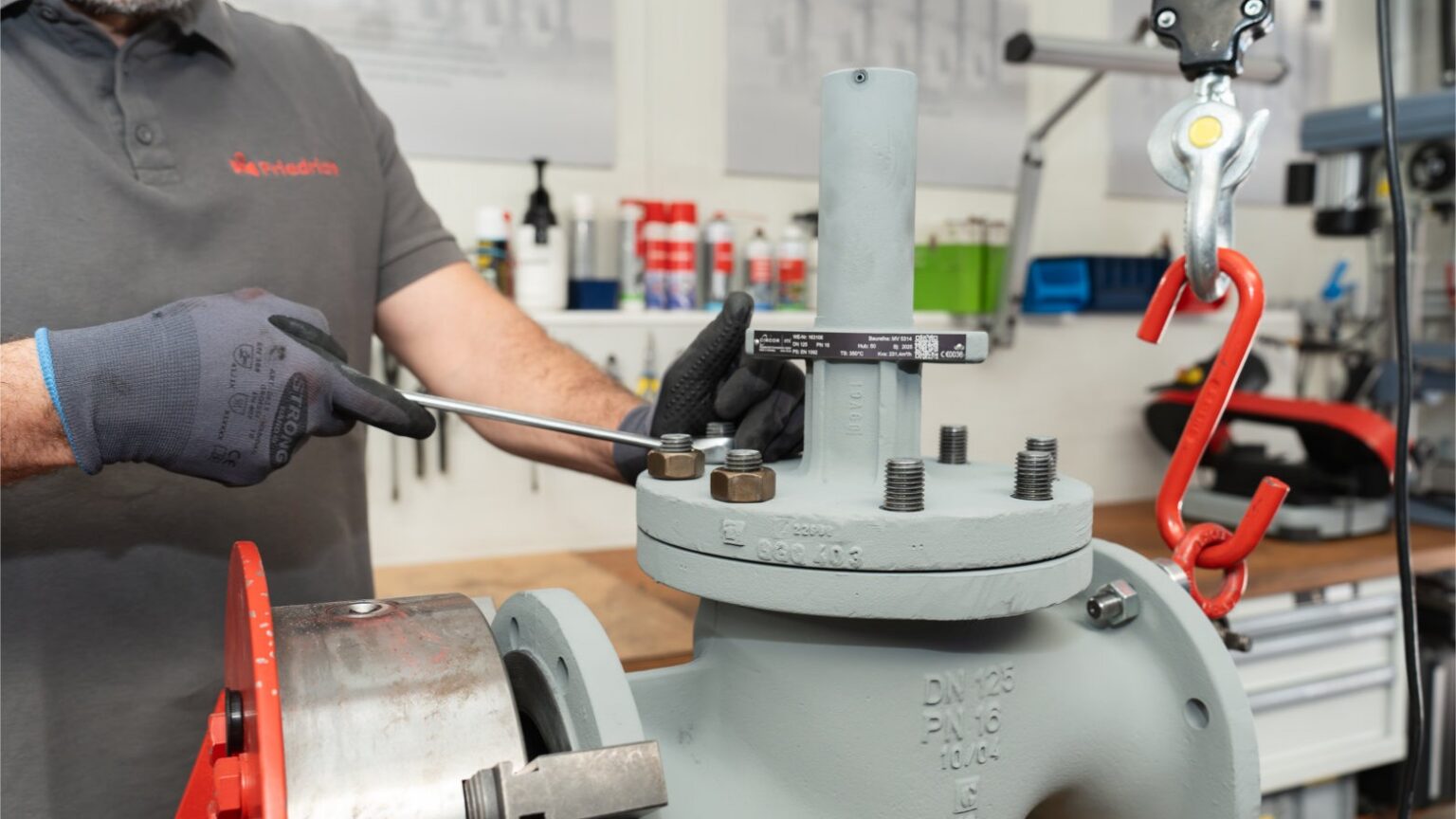
Ein Anlagenstillstand ist das einzige Zeitfenster, in dem Armaturen ohne Druck, ohne Temperatur und ohne Produktionsdruck zugänglich sind. Was in diesen Tagen nicht erledigt wird, läuft bis zum nächsten Stillstand weiter – mit undichten Spindeln, schwergängigen Antrieben und Sitzen, die im Durchgang nicht mehr halten. Ein guter Armaturen-Service beginnt deshalb nicht am ersten Stillstandstag, sondern Wochen davor: mit der Entscheidung, welche Armatur vor Ort revidiert, welche in der Werkstatt repariert und welche getauscht wird. Dieser Beitrag zeigt, welche Fragen vorher geklärt sein müssen – für Instandhalter, Betriebsleiter und Planer in Kraftwerken, in der Industrie und im Anlagenbau.
Armaturen-Service im Stillstand: Die Entscheidung fällt vor dem Abstellen
Im Stillstand selbst ist keine Zeit für Grundsatzfragen. Wird ein Ventil erst geöffnet und stellt sich dann heraus, dass der Sitz nicht nacharbeitbar ist und kein Ersatz am Lager liegt, bleibt nur die Wahl zwischen Provisorium und verlängertem Stillstand. Beides kostet mehr als eine Stunde Planung im Vorfeld.
Die drei Wege – Revision vor Ort, Reparatur in der Werkstatt, Tausch – haben jeweils eigene Vorlaufzeiten. Für die Revision vor Ort braucht es Dichtungssätze, Packungen und gegebenenfalls Spindeln in der richtigen Ausführung. Für die Werkstattreparatur braucht es Transport, Prüfstand und eine realistische Rücklaufzeit. Für den Tausch braucht es eine lieferbare Armatur mit passender Baulänge, Anschlussart und Druckstufe – und die ist bei Sonderwerkstoffen oder großen Nennweiten oft nicht kurzfristig verfügbar.
Wer den Stillstand plant, ordnet deshalb jede betroffene Armatur vorab einem der drei Wege zu und legt für jede Zuordnung einen Plan B fest: Was passiert, wenn die Revision vor Ort einen Schaden zeigt, der dort nicht zu beheben ist? Liegt dann eine Tauscharmatur bereit, oder wird die Leitung bis zum nächsten Stillstand anders abgesichert?
Die Armaturenliste: Bestand, Zustand und Vorgeschichte
Grundlage jeder Planung ist eine Liste der Armaturen, die im Stillstand angefasst werden sollen. Sie muss mehr enthalten als die Positionsnummer aus dem R&I-Schema. Sinnvoll sind je Armatur:
- Fabrikat, Typ, Nennweite (DN) und Druckstufe (PN oder Class) sowie der Werkstoff von Gehäuse, Sitz und Abschlusskörper
- Medium, Betriebsdruck und Betriebstemperatur an dieser Stelle
- Anschlussart – Flansch, Schweißende oder Gewinde. Sie entscheidet, wie aufwendig Ausbau und Wiedereinbau sind
- Antrieb und Zubehör: Handrad, Getriebe, pneumatischer, elektrischer oder hydraulischer Antrieb, Stellungsregler, Endlagenschalter
- bekannte Befunde aus dem Betrieb: Undichtheit an der Spindel, Durchgang bei geschlossener Armatur, Schwergängigkeit, Geräusche, Schwingungen
- Datum und Umfang der letzten Revision
Gerade der letzte Punkt fehlt oft. Ohne ihn lässt sich nicht beurteilen, ob eine Armatur auffällig ist, weil sie überfällig ist, oder weil an dieser Stelle im Prozess etwas nicht stimmt – etwa Kavitation an einem Regelventil oder Dampfschläge vor einem Schieber. Im zweiten Fall hilft auch die sorgfältigste Revision nur bis zum nächsten Stillstand, und die eigentliche Aufgabe ist eine Änderung an der Auslegung.
Prioritäten: Welche Armatur zuerst drankommt
Kaum ein Stillstand reicht für alles. In der Praxis hat sich eine Einteilung in drei Gruppen bewährt:
- Sicherheitsrelevant: Sicherheits- und Schnellschlussventile, Absperrungen vor Druckbehältern und alle Armaturen, an denen eine Freischaltung hängt. Sie kommen zuerst und werden nicht verschoben.
- Prozessrelevant: Regelventile und Regelklappen, deren Kennlinie den Prozess bestimmt, und Absperrarmaturen, die im laufenden Betrieb nicht isolierbar sind.
- Bedingt: Armaturen, die sich auch im Betrieb über Bypass oder Doppelabsperrung freischalten lassen. Sie sind die Reserve für den Fall, dass der Stillstand Zeit übrig lässt.
Die Gruppe entscheidet oft auch über den Weg. Bei sicherheitsrelevanten Armaturen ist der Tausch gegen eine geprüfte Armatur häufig die ruhigere Lösung als eine Revision unter Zeitdruck – die ausgebaute Armatur kann danach ohne Eile in der Werkstatt instand gesetzt werden und als Reserve ins Lager gehen. Welche Bauarten es dafür gibt, zeigt die Übersicht der Sicherheits- und Schnellschlussventile.
Revision vor Ort: Was an der Anlage geht
Die Revision vor Ort ist der Normalfall für Absperrventile, Schieber und Klappen in gutem Grundzustand. Der typische Umfang: Packung oder Spindelabdichtung erneuern, Deckeldichtung tauschen, Spindel und Gewinde reinigen und schmieren, Sitz und Kegel beziehungsweise Keil auf Riefen und Auswaschungen prüfen, Antrieb und Endlagen einstellen. Kleine Sitzschäden lassen sich bei manchen Bauformen vor Ort läppen. Wo die Grenze zwischen Nacharbeit und Tausch liegt, beschreibt der Beitrag Riefen an Absperrklappen, Schiebern und Ventilen: nacharbeiten oder tauschen.
Vor Ort geht die Revision rasch, solange keine Überraschung auftritt. Die Voraussetzungen sind trotzdem nicht trivial: Die Leitung muss drucklos, entleert und abgekühlt sein, die Freischaltung dokumentiert. Bei geschweißten Armaturen muss vorher klar sein, ob Deckel und Oberteil überhaupt zugänglich sind und ob genug Platz zum Ziehen der Spindel bleibt. Bei Faltenbalgventilen ist der Balg vor Ort meist nur dann zu wechseln, wenn der Hersteller eine komplette Oberteil-Einheit liefert – das gehört vorab abgefragt, nicht erst beim Öffnen.
Reparatur in der Werkstatt: Wenn die Armatur aus der Leitung muss
In die Werkstatt geht eine Armatur, wenn der Schaden vor Ort nicht zu beheben ist: tiefe Riefen oder Auswaschungen am Sitz, ein verzogener Keil, beschädigte Führungen, ein defekter Faltenbalg oder ein Antrieb, der auf dem Prüfstand neu eingestellt werden muss. Der Vorteil: Sitz und Abschlusskörper werden unter Werkstattbedingungen bearbeitet, und die Armatur kann nach der Reparatur einer Druck- und Dichtheitsprüfung unterzogen werden, bevor sie zurück in die Anlage kommt. Für Industriearmaturen beschreibt die EN 12266-1 diese Prüfungen.
Der Nachteil ist die Zeit. Ausbau, Transport, Bearbeitung, Prüfung und Wiedereinbau summieren sich – bei geschweißten Armaturen kommen das Heraustrennen, die neue Naht und deren Prüfung dazu. Für Armaturen, die im Stillstand zwingend zurück in die Leitung müssen, gibt es deshalb nur zwei saubere Varianten: Entweder ist die Werkstattreparatur mit festem Rücklauftermin vorab vereinbart, oder es liegt eine Tauscharmatur bereit, und die reparierte Armatur geht danach ins Lager.
Tausch: Wann eine neue Armatur die bessere Entscheidung ist
Der Tausch ist nicht automatisch die teuerste Lösung, oft ist er die planbarste. Er liegt nahe, wenn
- Ersatzteile für ein älteres Fabrikat nicht mehr oder nur mit langer Lieferzeit erhältlich sind,
- die Armatur an dieser Stelle von Anfang an unpassend ausgelegt war – etwa ein Absperrventil, das dauerhaft als Drosselorgan dient, oder ein Regelventil mit zu großem Kvs-Wert,
- sich Medium, Druck oder Temperatur seit der Errichtung der Anlage geändert haben,
- der Reparaturaufwand in die Nähe des Neupreises kommt, ohne dass die Armatur danach besser zur Aufgabe passt als vorher.
Beim Tausch gilt: Baulänge, Anschluss und Druckstufe müssen passen, sonst wird aus einem Armaturentausch ein Eingriff in die Rohrleitung. Wer früh eine Armaturenliste mit diesen Daten hat, kann Lieferzeiten prüfen, bevor der Stillstandstermin fix ist. Ing. Wilhelm Friedrich Gesellschaft m. b. H. führt Absperrventile, Absperrklappen und Regelventile der exklusiv vertretenen Fabrikate – darunter PERSTA, HORA, RTK und Knippenburg – und unterstützt bei der Auswahl einer Tauscharmatur mit gleichen Einbaumaßen.
Ersatzteile, Prüfungen und Dokumentation
Ein Ersatzteilpaket je Armatur – Packung, Deckeldichtung, gegebenenfalls Spindel und Sitzring – sollte vor dem Stillstand vor Ort liegen. Die Bestellung braucht die genauen Daten: Typ, Nennweite, Druckstufe, Werkstoffe und, wenn vorhanden, die Fabrikationsnummer vom Typenschild. Ein Foto des Typenschilds erspart dabei viele Rückfragen.
Für Druckgeräte und Ausrüstungsteile mit Sicherheitsfunktion gelten wiederkehrende Prüfungen nach den einschlägigen Vorschriften, in Österreich nach der Druckgeräteüberwachungsverordnung. Welche Prüfungen im Stillstand fällig sind und wer sie abnimmt, gehört in die Planung – ein Prüftermin, der erst am letzten Tag vereinbart wird, verlängert den Stillstand. Und jede Revision, jede Reparatur und jeder Tausch wird je Armatur dokumentiert. Diese Dokumentation ist beim nächsten Stillstand genau die Vorgeschichte, die in vielen Armaturenlisten fehlt.
Nach dem Stillstand: Wiederinbetriebnahme und Nachkontrolle
Die Arbeit ist nicht zu Ende, wenn die letzte Armatur montiert ist. Beim Anfahren zeigen sich Undichtheiten an frischen Packungen und Flanschdichtungen oft erst unter Temperatur. Stopfbuchsen werden nach dem Aufheizen nachgezogen, Antriebe und Stellungsregler im Prozess auf Hub und Endlagen geprüft, Kondensatableiter auf Funktion kontrolliert. In Dampfleitungen gilt zusätzlich: langsam anwärmen und vollständig entwässern, damit keine Dampfschläge die frisch revidierten Armaturen belasten.
Die eigene Serviceabteilung von Ing. Wilhelm Friedrich Gesellschaft m. b. H. übernimmt Inbetriebnahmen, Serviceleistungen und Reparaturen; die Servicetechniker sind auf die vertretenen Fabrikate geschult und zertifiziert. Das Servicegebiet umfasst Österreich sowie Tschechien, die Slowakei, Ungarn, Slowenien und Italien.
Häufige Fragen zum Armaturen-Service
Wie lange vor dem Stillstand sollte die Planung beginnen?
So früh, dass Ersatzteile und Tauscharmaturen sicher geliefert werden können. Die Lieferzeit hängt von Fabrikat, Werkstoff und Nennweite ab: Standardteile sind oft rasch verfügbar, Sonderwerkstoffe und große Nennweiten nicht. Deshalb zuerst die Armaturenliste erstellen, Lieferzeiten abfragen und erst dann den Umfang festlegen.
Reicht es, nur die Packung zu tauschen?
Wenn die Armatur nur an der Spindel undicht ist und in geschlossener Stellung dicht hält, oft ja. Hält sie im Durchgang nicht dicht, liegt der Schaden an Sitz oder Abschlusskörper – dann hilft eine neue Packung nicht.
Kann eine geschweißte Armatur vor Ort revidiert werden?
Bei vielen Bauformen ja, sofern Deckel und Oberteil zugänglich sind. Muss das Gehäuse selbst bearbeitet werden, wird die Armatur herausgetrennt; danach braucht es eine neue Schweißnaht samt Prüfung.
Lohnt sich die Reparatur eines älteren Fabrikats noch?
Das hängt an der Ersatzteilversorgung und am Zustand des Gehäuses. Sind Teile nicht mehr erhältlich, ist der Tausch gegen eine Armatur mit gleichen Einbaumaßen meist die planbarere Lösung.
Fazit: Der Stillstand wird vorher entschieden
Ob eine Armatur vor Ort revidiert, in der Werkstatt repariert oder getauscht wird, hängt an ihrem Zustand, an ihrer Bedeutung für Sicherheit und Prozess und an der Verfügbarkeit von Teilen und Ersatzarmaturen. Wer diese Fragen mit einer vollständigen Armaturenliste vor dem Abstellen beantwortet, hat im Stillstand vor allem Arbeit und deutlich weniger Überraschungen. Ing. Wilhelm Friedrich Gesellschaft m. b. H. liefert die Armaturen der vertretenen Fabrikate, berät bei der Auswahl und übernimmt mit der eigenen Serviceabteilung Inbetriebnahme, Service und Reparatur.
Valve service during a plant shutdown: on-site overhaul, workshop repair or replacement – what has to be settled beforehand
A plant shutdown is the only window in which valves are accessible without pressure, without temperature and without production pressure. Whatever is not done in these days stays in operation until the next shutdown – with leaking stems, sluggish actuators and seats that no longer hold tight. Good valve service therefore does not start on the first day of the shutdown but weeks earlier: with the decision which valve is overhauled on site, which is repaired in the workshop and which is replaced. This article shows which questions have to be answered in advance – for maintenance engineers, plant managers and planners in power plants, industry and plant engineering.
Valve service during a shutdown: the decision is made before the plant stops
During the shutdown itself there is no time for fundamental questions. If a valve is opened and it turns out that the seat cannot be reworked and no spare is in stock, the only choice left is between a temporary fix and an extended shutdown. Both cost more than an hour of planning in advance.
The three routes – on-site overhaul, workshop repair, replacement – each have their own lead times. An on-site overhaul needs gasket sets, packings and, where necessary, stems in the right version. A workshop repair needs transport, a test bench and a realistic turnaround time. A replacement needs a valve that can be delivered with matching face-to-face dimension, end connection and pressure rating – and for special materials or large nominal sizes that is often not available at short notice.
Whoever plans the shutdown therefore assigns each affected valve to one of the three routes in advance and defines a plan B for each assignment: what happens if the on-site overhaul reveals damage that cannot be fixed there? Is a replacement valve ready, or is the line secured differently until the next shutdown?
The valve list: inventory, condition and history
The basis of all planning is a list of the valves to be worked on during the shutdown. It has to contain more than the tag number from the P&ID. Useful per valve:
- make, type, nominal size (DN) and pressure rating (PN or Class), plus the material of body, seat and closure element
- medium, operating pressure and operating temperature at this point
- end connection – flange, butt-weld end or thread. It determines how much effort removal and reinstallation take
- actuator and accessories: handwheel, gearbox, pneumatic, electric or hydraulic actuator, positioner, limit switches
- known findings from operation: stem leakage, seat leakage when closed, stiffness, noise, vibration
- date and scope of the last overhaul
The last point is the one most often missing. Without it, there is no way to judge whether a valve is conspicuous because it is overdue, or because something in the process is wrong at this point – cavitation at a control valve, for example, or water hammer upstream of a gate valve. In the second case even the most careful overhaul only helps until the next shutdown, and the real task is a change in the design.
Priorities: which valve comes first
Hardly any shutdown is long enough for everything. In practice a division into three groups has proven itself:
- Safety-relevant: safety and quick-closing valves, isolation upstream of pressure vessels and all valves that an isolation depends on. They come first and are not postponed.
- Process-relevant: control valves and control butterfly valves whose characteristic determines the process, and isolating valves that cannot be isolated during operation.
- Conditional: valves that can also be isolated during operation via bypass or double block. They are the reserve in case the shutdown leaves time.
The group often decides the route as well. For safety-relevant valves, replacement with a tested valve is frequently the calmer solution than an overhaul under time pressure – the removed valve can then be repaired in the workshop without haste and go into stock as a spare. The designs available for this are shown in the overview of safety and quick-closing valves.
On-site overhaul: what can be done at the plant
The on-site overhaul is the standard case for globe valves, gate valves and butterfly valves in good basic condition. The typical scope: renew the packing or stem seal, replace the bonnet gasket, clean and lubricate stem and thread, check seat and plug or wedge for scoring and erosion, adjust actuator and end positions. Minor seat damage can be lapped on site for some designs. Where the line between rework and replacement lies is described in the article Scoring on butterfly valves, gate valves and globe valves: rework or replace (in German).
On site the overhaul is quick as long as there are no surprises. The prerequisites are still not trivial: the line has to be depressurised, drained and cooled down, and the isolation documented. For welded valves it has to be clear beforehand whether bonnet and upper part are accessible at all and whether there is enough room to pull the stem. For bellows-sealed valves the bellows can usually only be changed on site if the manufacturer supplies a complete bonnet assembly – that has to be checked in advance, not when the valve is opened.
Workshop repair: when the valve has to come out of the line
A valve goes to the workshop when the damage cannot be fixed on site: deep scoring or erosion on the seat, a distorted wedge, damaged guides, a defective bellows or an actuator that has to be readjusted on the test bench. The advantage: seat and closure element are machined under workshop conditions, and after the repair the valve can undergo a pressure and leak test before it returns to the plant. For industrial valves these tests are described in EN 12266-1.
The drawback is time. Removal, transport, machining, testing and reinstallation add up – for welded valves, cutting out, the new weld and its inspection come on top. For valves that must go back into the line during the shutdown there are therefore only two clean options: either the workshop repair is agreed in advance with a fixed return date, or a replacement valve is ready and the repaired valve goes into stock afterwards.
Replacement: when a new valve is the better decision
Replacement is not automatically the most expensive solution; often it is the most predictable one. It makes sense when
- spare parts for an older make are no longer available or only with long delivery times,
- the valve at this point was unsuitably sized from the start – for example a globe valve used permanently as a throttling device, or a control valve with too large a Kvs value,
- medium, pressure or temperature have changed since the plant was erected,
- the repair effort approaches the price of a new valve without the valve fitting the task any better afterwards.
For a replacement, face-to-face dimension, connection and pressure rating have to match, otherwise a valve swap turns into an intervention in the piping. With an early valve list containing this data, delivery times can be checked before the shutdown date is fixed. Ing. Wilhelm Friedrich Gesellschaft m. b. H. supplies globe valves, butterfly valves and control valves of the makes it represents exclusively – including PERSTA, HORA, RTK and Knippenburg – and supports the selection of a replacement valve with identical installation dimensions.
Spare parts, inspections and documentation
A spare parts kit per valve – packing, bonnet gasket and, where necessary, stem and seat ring – should be on site before the shutdown. The order needs exact data: type, nominal size, pressure rating, materials and, if available, the serial number from the nameplate. A photo of the nameplate saves many queries.
Pressure equipment and accessories with a safety function are subject to periodic inspections under the applicable regulations, in Austria under the Pressure Equipment Monitoring Ordinance (Druckgeräteüberwachungsverordnung). Which inspections are due during the shutdown and who performs them belongs in the planning – an inspection date arranged only on the last day extends the shutdown. And every overhaul, repair and replacement is documented per valve. At the next shutdown, this documentation is exactly the history that is missing from many valve lists.
After the shutdown: recommissioning and follow-up checks
The work is not finished when the last valve is mounted. During start-up, leaks at fresh packings and flange gaskets often only appear under temperature. Stuffing boxes are retightened after heating up, actuators and positioners are checked for stroke and end positions in the process, steam traps are checked for function. In steam lines, warm up slowly and drain thoroughly so that no water hammer stresses the freshly overhauled valves.
The in-house service department of Ing. Wilhelm Friedrich Gesellschaft m. b. H. handles commissioning, service work and repairs; its service technicians are trained and certified for the represented makes. The service area covers Austria as well as the Czech Republic, Slovakia, Hungary, Slovenia and Italy.
Frequently asked questions about valve service
How long before the shutdown should planning start?
Early enough for spare parts and replacement valves to be delivered reliably. Delivery time depends on make, material and nominal size: standard parts are often available quickly, special materials and large nominal sizes are not. So draw up the valve list first, request delivery times and only then define the scope.
Is it enough to replace only the packing?
If the valve only leaks at the stem and holds tight in the closed position, often yes. If it leaks across the seat, the damage is at the seat or closure element – then new packing does not help.
Can a welded valve be overhauled on site?
For many designs yes, provided bonnet and upper part are accessible. If the body itself has to be machined, the valve is cut out; afterwards a new weld including its inspection is needed.
Is repairing an older make still worthwhile?
That depends on the spare parts supply and the condition of the body. If parts are no longer available, replacement with a valve of identical installation dimensions is usually the more predictable solution.
Conclusion: the shutdown is decided beforehand
Whether a valve is overhauled on site, repaired in the workshop or replaced depends on its condition, its importance for safety and process, and the availability of parts and replacement valves. Answering these questions with a complete valve list before the plant stops leaves mainly work during the shutdown and far fewer surprises. Ing. Wilhelm Friedrich Gesellschaft m. b. H. supplies the valves of the represented makes, advises on selection and, with its own service department, takes care of commissioning, service and repair.
