
Sicherheits-Schnellschlussventil für Gas, Öl oder Dampf: welche Baureihe wofür und was die Schließzeit bedeutet
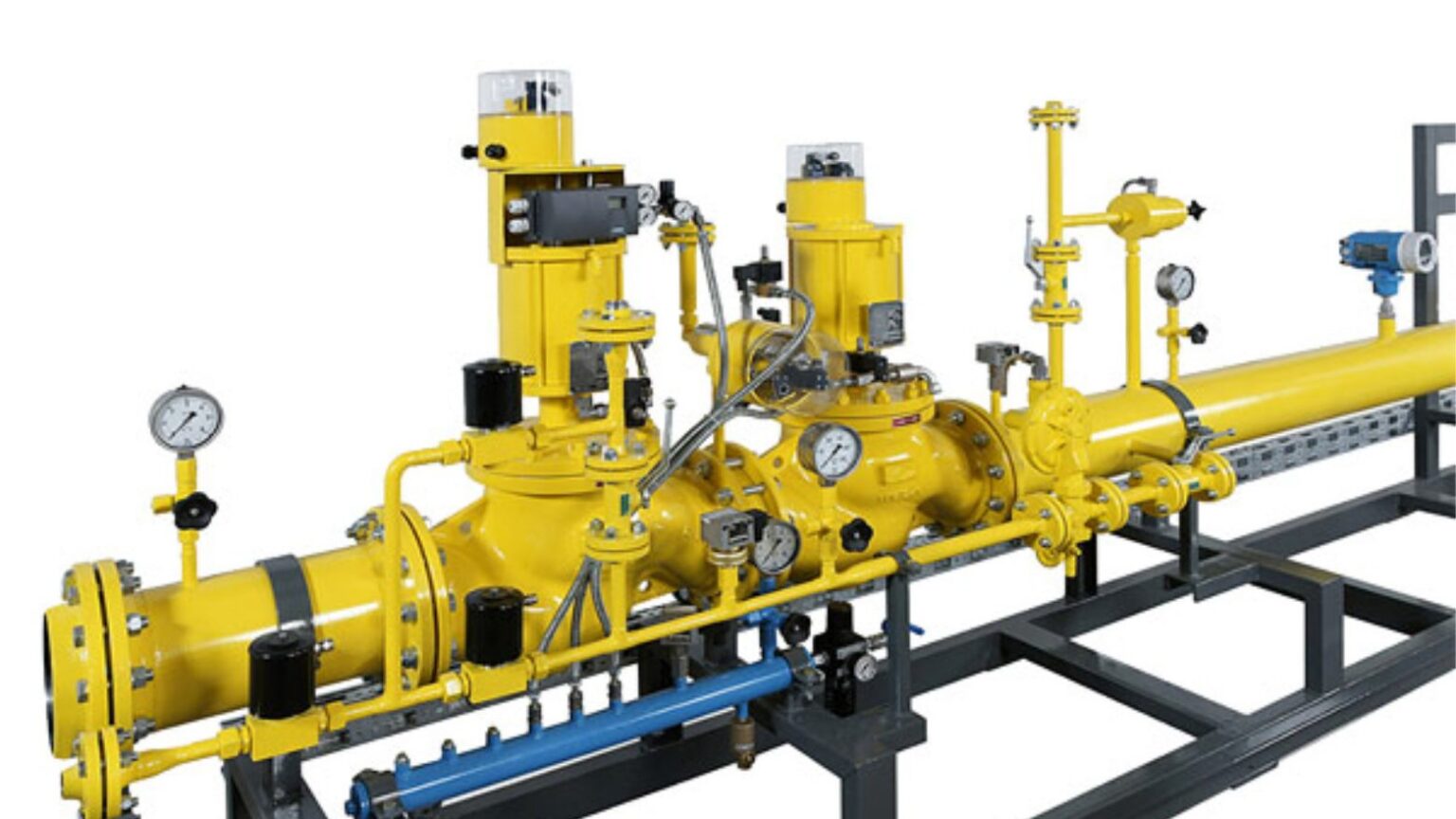
Ein Sicherheits-Schnellschlussventil hat eine einzige Aufgabe: im Störfall die Zufuhr von Gas, Öl oder Dampf schnell und selbsttätig absperren. Die Auswahl hängt an wenigen Fragen, die in der richtigen Reihenfolge gestellt werden wollen: Welches Medium? Welche Nennweite? Welche Schließzeit? Und wie wird der Raum zwischen zwei Absperrungen entlastet? Dieser Beitrag geht die Entscheidungen der Reihe nach durch, mit den Baureihen, die Ing. Wilhelm Friedrich Gesellschaft m. b. H. auf der Seite Sicherheits-Schnellschluss-Ventile führt. Eine Frage beantwortet er bewusst nicht: wann ein solches Ventil vorgeschrieben ist und in welcher Anordnung. Das legen das jeweilige Regelwerk, der Anlagenplaner und die zuständige Prüfstelle fest.
Was ein Sicherheits-Schnellschlussventil leistet – und was nicht
Ein Sicherheits-Schnellschlussventil ist eine Absperrarmatur mit automatischer Absperrfunktion. Im Betrieb hält eine Hilfsenergie das Ventil gegen eine Feder offen; welche Hilfsenergie das ist, hängt von der Antriebsart der jeweiligen Ausführung ab. Nimmt die Steuerung die Freigabe zurück – weil die Flammenüberwachung anspricht, ein Druckwächter auslöst oder der Not-Aus-Kreis öffnet –, entfällt die Hilfsenergie und die Feder schließt das Ventil. Genau so beschreibt es die Herstellerangabe auf der Produktseite: Bei Ausfall der Hilfsenergie schließen die Sicherheits-Schnellschluss-Ventile durch Federkraft.
Wichtig ist die Abgrenzung zu zwei Armaturen, mit denen es im Alltag oft verwechselt wird. Ein Sicherheitsventil öffnet bei Überdruck und bläst ab – es schützt einen Behälter oder eine Leitung vor zu hohem Druck. Ein Sicherheits-Schnellschlussventil schließt und unterbricht den Durchfluss. Und ein gewöhnliches Absperrventil wird von Hand oder über einen Antrieb betätigt, hat aber keine selbsttätige Rückstellung in die sichere Stellung. Wer in einer Ausschreibung „Schnellschluss“ liest, sollte deshalb prüfen, ob die Sicherheitsfunktion gemeint ist oder nur eine kurze Stellzeit.
Ebenso wichtig ist, was das Ventil nicht ersetzt: Es ist ein Glied in einer Sicherheitskette aus Sensorik, Steuerung und Armatur. Ob die Kette im Störfall richtig auslöst, entscheiden Auslegung, Verdrahtung und die wiederkehrende Prüfung – nicht die Armatur allein.
Erste Entscheidung: das Medium
Die Produktseite gliedert die Baureihen nach drei Medien, und diese Gliederung ist auch der richtige Einstieg in die Auswahl.
- Brennbare Gase nach G 260: Das DVGW-Arbeitsblatt G 260 beschreibt die Gasbeschaffenheit und teilt die Brenngase in Gasfamilien ein. Die Herstellerangabe auf der Produktseite nennt die 1., 2. und 3. Gasfamilie.
- Heizöl: Heizöl EL, M und S sowie Öle, die nicht nach DIN 51603 genormt sind.
- Dampf: eigene Ausführungen in den Baureihen ASV und KVAZ.
Warum das Medium zuerst kommt: Es bestimmt Werkstoffe, Dichtungen und die zulässige Temperatur. Ein Ventil für Erdgas bei Umgebungstemperatur und eines für Sattdampf stellen andere Anforderungen an Sitz und Spindelabdichtung, auch wenn sie äußerlich ähnlich aussehen. Für Gase mit Wasserstoffanteil oder Prozessgase außerhalb der üblichen Gasfamilien gehört die genaue Zusammensetzung ausdrücklich in die Anfrage – hier entscheidet der Hersteller, ob und in welcher Ausführung ein Ventil geeignet ist.
Zweite Entscheidung: Nennweite und Baureihe
Ist das Medium klar, grenzt die Nennweite die Baureihe ein. Laut Produktseite stehen für brennbare Gase folgende Baureihen zur Verfügung:
- ASVG in DN 15, 20 und 25
- KVAZ in DN 40 und 50
- FDS-VE in DN 65 sowie DN 200, 250 und 300
- GSV in DN 80, 100, 125 und 150
- GSV-GASSKO in DN 100, 125 und 150
- GASSKO in DN 200
Für Heizöl führt die Seite ASV in DN 15, 20 und 25, KVAZ in DN 32, 40 und 50 sowie eine KVAZ-Ausführung für Hochdruck in DN 15 bis DN 50. Für Dampf sind es ASV in DN 15 bis DN 25 und KVAZ in DN 32 bis DN 50.
Zwei Hinweise zur Lesart. Erstens: Die Nennweite des Ventils muss nicht der Nennweite der Rohrleitung entsprechen. Entscheidend ist der Durchfluss bei dem verfügbaren Vordruck und der Druckverlust, den die Brennerregelung noch verträgt. Zweitens: Die Seite nennt keine Druckstufen je Baureihe. Betriebsdruck, Prüfdruck und Anschlussart sind deshalb Teil jeder Anfrage – bei Öl besonders dann, wenn die Hochdruckausführung in Frage kommt.
Schließzeit: was „innerhalb von 1 Sekunde“ bedeutet
Als Herstellerangabe nennt die Produktseite eine Schließzeit innerhalb von 1 Sekunde, in Regelfunktion innerhalb von 5 Sekunden. Die beiden Werte stehen für zwei Betriebsweisen. In der reinen Sicherheitsfunktion soll das Ventil nach der Abschaltung so rasch schließen, dass nach dem Erlöschen der Flamme möglichst wenig Brennstoff nachströmt. Übernimmt die Armatur zusätzlich eine Stellaufgabe, gilt der längere Wert. Welche der beiden Angaben für eine bestimmte Ausführung zutrifft, hängt vom Antrieb ab und wird im Angebot festgehalten.
Für die Planung zählt nicht die Schließzeit allein, sondern die gesamte Abschaltzeit: von der Störung über die Auswertung in der Steuerung bis zur geschlossenen Armatur. Welche Gesamtzeit zulässig ist, ergibt sich aus der einschlägigen Brennernorm und dem Sicherheitskonzept der Anlage. Der Anlagenplaner rechnet die Kette durch; die Schließzeit der Armatur ist ein Teil davon, aber nicht der einzige.
Ein praktischer Punkt wird dabei leicht übersehen: Schnell schließen heißt auch, eine strömende Flüssigkeit abrupt abzubremsen. Bei Heizöl kann ein schlagartiges Absperren Druckstöße in der Leitung auslösen. Leitungsführung, Pumpenregelung und gegebenenfalls eine Dämpfung gehören deshalb in dieselbe Betrachtung wie das Ventil selbst.
Federrückstellung: der Ausfall der Hilfsenergie ist der Auslegungsfall
Ein Sicherheits-Schnellschlussventil ist so ausgelegt, dass der ungünstigste Fall zugleich der sichere ist: Fällt der Strom aus, reißt eine Steuerleitung ab oder nimmt die Steuerung die Freigabe zurück, schließt die Feder. Daraus folgen drei Fragen für die Auswahl.
- Reicht die Federkraft gegen den Vordruck? Die Feder muss das Ventil gegen den anstehenden Druck sicher in den Sitz drücken. Deshalb gehört der maximale Vordruck verbindlich in die Anfrage und nicht nur der Betriebsdruck.
- Welche Hilfsenergie steht zur Verfügung? Spannung und Art der Ansteuerung bzw. der verfügbare Steuerluftdruck bestimmen, welcher Antrieb in Frage kommt.
- Wie wird die Funktion geprüft? Eine Feder, die im Normalbetrieb nie arbeiten muss, zeigt im Alltag nicht, ob sie im Ernstfall arbeitet. Funktionsprüfungen in den Intervallen, die Hersteller, Regelwerk und Prüfstelle vorgeben, sind deshalb Teil des Betriebs.
Für Prüfung, Instandsetzung und Tausch vor Ort steht der Service von Ing. Wilhelm Friedrich Gesellschaft m. b. H. zur Verfügung – in Österreich und im Servicegebiet Tschechien, Slowakei, Ungarn, Slowenien und Italien, wie auf der Seite Vertriebsgebiet beschrieben.
Das Entlüftungsventil zwischen zwei Schnellschlussventilen
In Gasstrecken werden häufig zwei Sicherheits-Schnellschlussventile hintereinander angeordnet. Zwischen ihnen entsteht ein abgeschlossener Leitungsabschnitt. Hier setzt das Entlüftungsventil an, das auf der Produktseite in drei Ausführungen geführt wird: ZE 40 mit Anschluss G 3/4, ASVG/O in DN 15, 20 und 25 sowie KVAZ/O in DN 50.
Das Prinzip: Sind beide Hauptventile geschlossen, ist das Entlüftungsventil offen und leitet den Zwischenraum über eine eigene Leitung an einen sicheren Ort ins Freie ab. Lässt das erste Ventil eine geringe Menge durch, steigt dadurch kein Druck vor dem zweiten an, und es gelangt kein Gas Richtung Brenner. Beim Anfahren schließt das Entlüftungsventil, bevor die Hauptventile öffnen. Wohin die Entlüftungsleitung geführt wird und wie sie auszuführen ist, legt die Planung fest.
Die Produktseite zeigt dazu ein Beispiel: eine Ventilkombination aus KVAZ und KVAZ/S mit dem Entlastungsventil ASV/O. Ob eine Strecke ein Entlüftungsventil, eine Dichtheitskontrolle oder beides braucht, hängt von Leistung, Gasart und Regelwerk ab – auch hier entscheidet die Planung, nicht die Armaturenliste.
Einzelventil oder fertige Armaturenstation
Neben Einzelarmaturen zeigt die Produktseite mehrere Kombinationen: eine Armaturenstation DN 150/200, eine Armaturenstation DN 50 für flüssige Brennstoffe, eine kombinierte Armaturenstation für gasförmige und flüssige Brennstoffe sowie das Kompaktsystem ASS-ZAK als Brennerstation in DN 25 PN 40.
Eine Station lohnt sich, wenn mehrere Funktionen zusammenkommen: Absperren, Entlüften, Filtern, Druck regeln und Messen. Statt Einzelteile vor Ort zu verrohren, kommt die Kombination als Einheit und wird nur noch angeschlossen. Das verkürzt die Montage und klärt die Schnittstellen zwischen den Gewerken. Einzelarmaturen sind die bessere Wahl, wenn eine bestehende Strecke ergänzt oder ein einzelnes Ventil ersetzt wird. Für die Druck- und Mengenregelung in derselben Strecke kommen Regelventile dazu, für die Überwachung von Druck und Temperatur Geräte aus der Messtechnik.
Was in eine Anfrage gehört
Mit diesen Angaben lässt sich die Baureihe ohne Rückfragen eingrenzen:
- Medium mit Zusammensetzung: Gasfamilie, Ölsorte oder Dampfzustand
- Durchfluss, minimaler und maximaler Vordruck, zulässiger Druckverlust
- Betriebstemperatur und Umgebungsbedingungen, etwa Aufstellung im Freien oder in einem explosionsgefährdeten Bereich
- Nennweite und Anschlussart der Leitung
- Hilfsenergie: Spannung bzw. Steuerluftdruck
- gewünschte Anordnung: Einzelventil, Doppelabsperrung mit Entlüftung oder komplette Station
- Regelwerk und Prüfstelle, nach denen die Anlage abgenommen wird
Häufige Fragen zum Sicherheits-Schnellschlussventil
Ist ein Sicherheits-Schnellschlussventil dasselbe wie ein Sicherheitsventil?
Nein. Ein Sicherheitsventil öffnet bei Überdruck und bläst Medium ab. Ein Sicherheits-Schnellschlussventil schließt im Störfall und unterbricht die Zufuhr. Die beiden Armaturen ergänzen einander, ersetzen einander aber nicht.
Wann ist ein Sicherheits-Schnellschlussventil vorgeschrieben?
Das hängt von Anlage, Leistung, Medium und dem anzuwendenden Regelwerk ab. Eine verbindliche Antwort geben der Anlagenplaner und die zuständige Prüfstelle. Ing. Wilhelm Friedrich Gesellschaft m. b. H. liefert die passende Armatur zu der Anordnung, die dort festgelegt wird.
Kann dasselbe Ventil für Gas und Öl verwendet werden?
Baureihennamen wie ASV und KVAZ kommen auf der Produktseite in mehreren Mediengruppen vor, die Ausführungen sind aber dem jeweiligen Medium zugeordnet. Für Feuerungen, die beide Brennstoffe nutzen, gibt es kombinierte Armaturenstationen für gasförmige und flüssige Brennstoffe.
Fazit: in vier Schritten zur passenden Baureihe
Medium, Nennweite, Schließzeit und Entlastung: In dieser Reihenfolge lässt sich ein Sicherheits-Schnellschlussventil sauber auswählen. Was davon vorgeschrieben ist, klären Planung und Prüfstelle. Was dafür lieferbar ist, steht auf der Seite Sicherheits-Schnellschluss-Ventile – und für alles, was dort nicht steht, ist Ing. Wilhelm Friedrich Gesellschaft m. b. H. in Stetten seit 1983 in Österreich und seit 2019 in Südosteuropa der Ansprechpartner, mit eigener Serviceabteilung für Prüfung und Tausch vor Ort.
Safety shut-off valve for gas, oil or steam: which series for which job, and what the closing time means
A safety shut-off valve – in German Sicherheits-Schnellschlussventil – has one single task: to cut off the supply of gas, oil or steam quickly and automatically when a fault occurs. The selection depends on a handful of questions asked in the right order: Which medium? Which nominal size? Which closing time? And how is the space between two shut-off points relieved? This article works through these decisions one by one, using the series that Ing. Wilhelm Friedrich Gesellschaft m. b. H. lists on its page safety shut-off valves. One question it deliberately leaves open: when such a valve is mandatory and in which arrangement. That is defined by the applicable regulations, the plant designer and the responsible inspection body.
What a safety shut-off valve does – and what it does not
A safety shut-off valve is an isolating valve with an automatic shut-off function. In operation, an auxiliary energy holds the valve open against a spring; which kind of auxiliary energy that is depends on the actuator of the specific version. When the control system withdraws its release – because the flame monitor responds, a pressure switch trips or the emergency stop circuit opens – the auxiliary energy drops out and the spring closes the valve. This is exactly how the manufacturer’s information on the product page puts it: if the auxiliary energy fails, the safety shut-off valves close by spring force.
It is important to distinguish it from two other valves it is often confused with. A safety relief valve opens on overpressure and discharges – it protects a vessel or a pipe against excessive pressure. A safety shut-off valve closes and interrupts the flow. And an ordinary globe or stop valve is operated by hand or by an actuator, but has no automatic return to the safe position. Anyone reading „quick-closing“ in a tender should therefore check whether the safety function is meant or merely a short stroke time.
The valve is one link in a safety chain made up of sensors, control system and valve. Whether that chain trips correctly in a fault depends on design, wiring and recurring inspection – not on the valve alone.
First decision: the medium
The product page groups the series by three media, and this grouping is also the right starting point for selection.
- Combustible gases according to G 260: The DVGW worksheet G 260 describes gas quality and divides fuel gases into gas families. The manufacturer’s information on the product page names the 1st, 2nd and 3rd gas family.
- Fuel oil: fuel oil EL, M and S as well as oils not standardised to DIN 51603.
- Steam: dedicated versions in the ASV and KVAZ series.
Why the medium comes first: it determines materials, seals and the permissible temperature. A valve for natural gas at ambient temperature and one for saturated steam place different demands on seat and stem sealing, even if they look similar from the outside. For gases containing hydrogen or process gases outside the usual gas families, the exact composition must be stated in the enquiry – here the manufacturer decides whether and in which version a valve is suitable.
Second decision: nominal size and series
Once the medium is clear, the nominal size narrows down the series. According to the product page, the following series are available for combustible gases:
- ASVG in DN 15, 20 and 25
- KVAZ in DN 40 and 50
- FDS-VE in DN 65 as well as DN 200, 250 and 300
- GSV in DN 80, 100, 125 and 150
- GSV-GASSKO in DN 100, 125 and 150
- GASSKO in DN 200
For fuel oil the page lists ASV in DN 15, 20 and 25, KVAZ in DN 32, 40 and 50, and a high-pressure KVAZ version in DN 15 to DN 50. For steam it is ASV in DN 15 to DN 25 and KVAZ in DN 32 to DN 50.
Two notes on reading these figures. First: the nominal size of the valve does not have to match the nominal size of the pipe. What matters is the flow rate at the available inlet pressure and the pressure drop the burner control can still tolerate. Second: the page does not state pressure ratings per series. Operating pressure, test pressure and connection type are therefore part of every enquiry – for oil especially when the high-pressure version is being considered.
Closing time: what „within 1 second“ means
As manufacturer’s information, the product page states a closing time within 1 second, and within 5 seconds in control function. The two values stand for two modes of operation. In the pure safety function, the valve is meant to close so quickly after shutdown that as little fuel as possible continues to flow once the flame has gone out. If the valve also takes on a control task, the longer value applies. Which of the two figures applies to a particular version depends on the actuator and is recorded in the quotation.
For planning purposes, what counts is not the closing time alone but the total shutdown time: from the fault, through evaluation in the control system, to the closed valve. The permissible total time follows from the relevant burner standard and the safety concept of the plant. The plant designer calculates the whole chain.
Closing fast also means stopping a flowing liquid abruptly. With fuel oil, sudden shut-off can cause pressure surges in the line. Pipe routing, pump control and, where necessary, damping therefore belong in the same assessment as the valve itself.
Spring return: loss of auxiliary energy is the design case
A safety shut-off valve is designed so that the worst case is at the same time the safe case: if the power fails, a control line breaks or the control system withdraws its release, the spring closes the valve. This leads to three questions for selection.
- Is the spring force sufficient against the inlet pressure? The spring must press the valve securely into its seat against the pressure present. The maximum inlet pressure – not just the operating pressure – therefore belongs in the enquiry.
- Which auxiliary energy is available? Voltage and type of control, or the available control air pressure, determine which actuator can be used.
- How is the function tested? A spring that never has to work in normal operation gives no everyday sign of whether it will work in an emergency. Function tests at the intervals specified by the manufacturer, the regulations and the inspection body are therefore part of operation.
For inspection, repair and replacement on site, the service department of Ing. Wilhelm Friedrich Gesellschaft m. b. H. is available – in Austria and in the service area of the Czech Republic, Slovakia, Hungary, Slovenia and Italy, as described on the page sales area.
The vent valve between two safety shut-off valves
In gas trains, two safety shut-off valves are often arranged one after the other. Between them, a closed section of pipe is created. This is where the vent valve comes in, which the product page lists in three versions: ZE 40 with a G 3/4 connection, ASVG/O in DN 15, 20 and 25, and KVAZ/O in DN 50.
The principle: when both main valves are closed, the vent valve is open and discharges the intermediate space through a separate line to a safe location outdoors. If the first valve lets a small amount pass, no pressure can rise in front of the second one, and no gas reaches the burner. On start-up, the vent valve closes before the main valves open. Where the vent line is routed and how it is to be executed is defined by the plant design.
The product page shows an example of this: a valve combination of KVAZ and KVAZ/S with the relief valve ASV/O. Whether a train needs a vent valve, a valve proving system or both depends on burner output, gas type and regulations – here, too, the design decides, not the valve list.
Single valve or complete valve station
Besides individual valves, the product page shows several combinations: a valve station DN 150/200, a valve station DN 50 for liquid fuels, a combined valve station for gaseous and liquid fuels, and the ASS-ZAK compact system as a burner station in DN 25 PN 40.
A station pays off when several functions come together: shutting off, venting, filtering, pressure control and measurement. Instead of piping individual components on site, the combination arrives as one unit and only needs to be connected. That shortens installation and clarifies the interfaces between trades. Individual valves are the better choice when an existing train is being extended or a single valve replaced. For pressure and flow control in the same train, control valves are added, and for monitoring pressure and temperature, instruments from the measurement technology range.
What belongs in an enquiry
With this information, the series can be narrowed down without queries:
- medium and composition: gas family, oil grade or steam condition
- flow rate, minimum and maximum inlet pressure, permissible pressure drop
- operating temperature and ambient conditions, for example outdoor installation or a potentially explosive area
- nominal size and connection type of the pipe
- auxiliary energy: voltage or control air pressure
- required arrangement: single valve, double block with vent, or complete station
- regulations and inspection body according to which the plant is accepted
Frequently asked questions about safety shut-off valves
Is a safety shut-off valve the same as a safety relief valve?
No. A safety relief valve opens on overpressure and discharges the medium. A safety shut-off valve closes in a fault and interrupts the supply. The two complement each other but do not replace each other.
When is a safety shut-off valve mandatory?
That depends on the plant, its output, the medium and the applicable regulations. A binding answer comes from the plant designer and the responsible inspection body. Ing. Wilhelm Friedrich Gesellschaft m. b. H. supplies the matching valve for the arrangement specified there.
Can the same valve be used for gas and oil?
Series names such as ASV and KVAZ appear on the product page in several media groups, but the versions are assigned to the respective medium. For firing systems that use both fuels, there are combined valve stations for gaseous and liquid fuels.
Conclusion: four steps to the right series
Medium, nominal size, closing time and relief: in this order a safety shut-off valve can be selected cleanly. What is mandatory is clarified by design and inspection body. What is available for it is shown on the page safety shut-off valves – and for everything not listed there, Ing. Wilhelm Friedrich Gesellschaft m. b. H. in Stetten has been the contact in Austria since 1983 and in South-Eastern Europe since 2019, with its own service department for inspection and replacement on site.
