
Kugelhahn im Dampf- und Heißwassernetz: wann er statt eines Absperrventils taugt – Sitzwerkstoff, Temperatur, Bauform
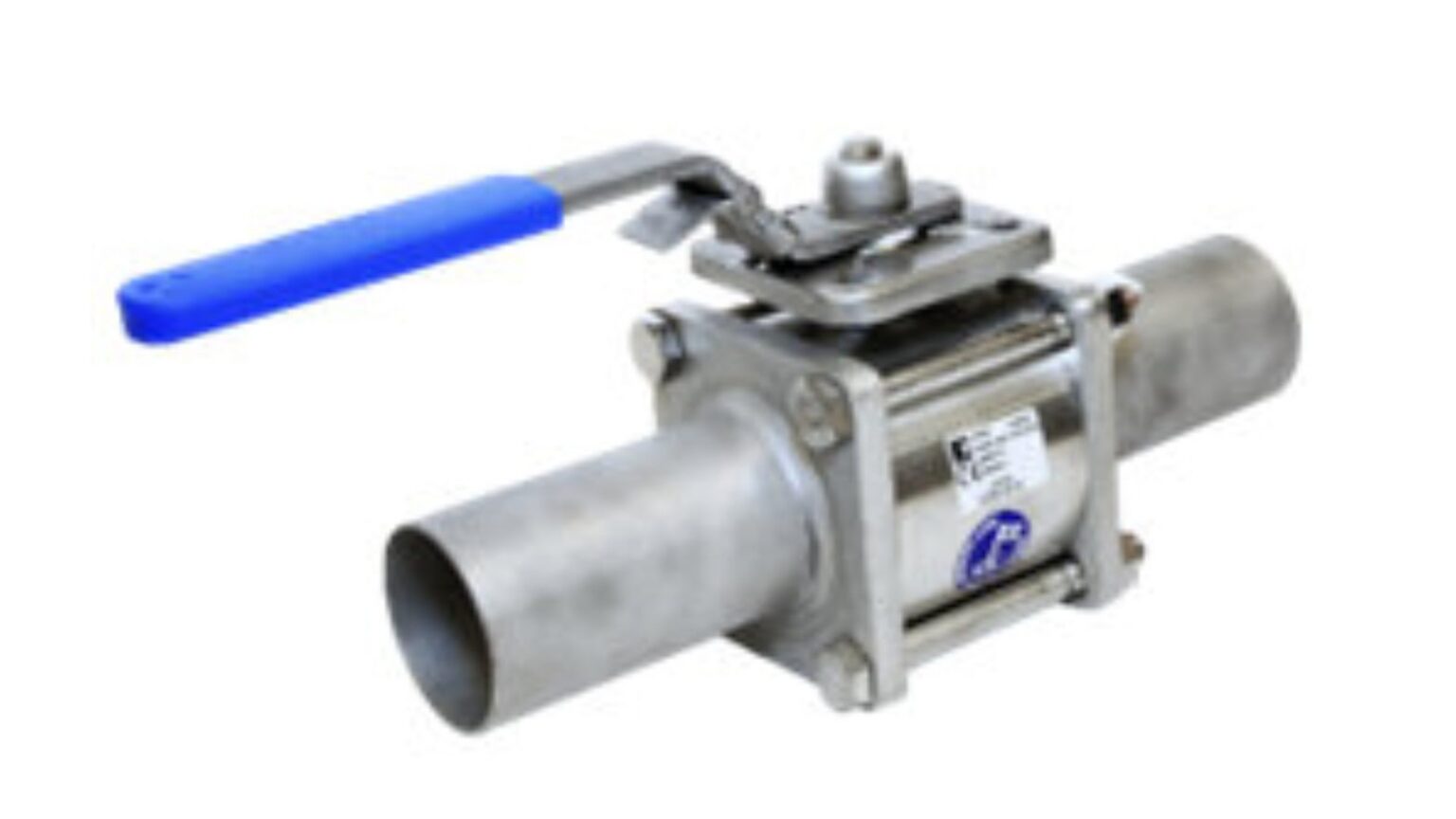
Ein Kugelhahn öffnet und schließt mit einer Vierteldrehung, gibt im offenen Zustand nahezu den vollen Rohrquerschnitt frei und lässt sich mit einem Schwenkantrieb einfach automatisieren. Im Kaltwasser- und im Gasnetz ist er deshalb die übliche Absperrarmatur. Ob ein Kugelhahn im Dampf– oder Heißwassernetz dieselbe Aufgabe übernehmen kann, entscheiden drei Dinge: der Sitzwerkstoff, die tatsächliche Temperatur im Betrieb und die Bauform. Dieser Beitrag zeigt, wann der Kugelhahn die richtige Wahl ist, wann das Absperrventil die sicherere bleibt und welche Angaben vor der Bestellung auf dem Tisch liegen sollten.
Kugelhahn im Dampf: worum es bei der Entscheidung geht
Absperrventil und Kugelhahn erfüllen dieselbe Funktion, arbeiten aber nach völlig verschiedenen Prinzipien. Beim Absperrventil drückt ein Kegel in Achsrichtung auf einen Sitz. Die Dichtfläche ist klein, der Anpressdruck hoch, und Sitz und Kegel bestehen meist aus Metall oder tragen eine Panzerung. Das Ventil verträgt Temperaturwechsel gut, kann drosseln und lässt sich über den Deckel revidieren. Der Preis dafür ist ein höherer Druckverlust, weil das Medium im Gehäuse zweimal umgelenkt wird, und ein längerer Hub bis zur vollen Öffnung.
Beim Kugelhahn dreht sich eine durchbohrte Kugel um 90 Grad. Abgedichtet wird über zwei Sitzringe, die links und rechts an der Kugel anliegen. Die Dichtheit hängt damit fast vollständig an diesen beiden Ringen – und genau dort liegt im Dampf- und Heißwassernetz die Grenze. Wer die Frage „Kugelhahn oder Absperrventil“ beantworten will, beginnt deshalb beim Sitz und nicht beim Gehäuse.
Der Sitzwerkstoff bestimmt die Temperaturgrenze
Weich dichtende Kugelhähne haben Sitzringe aus PTFE, häufig gefüllt oder modifiziert, um Kaltfluss und Verschleiß zu verringern. Für höhere Temperaturen werden Hochleistungskunststoffe wie PEEK eingesetzt. Jeder dieser Werkstoffe hat eine eigene Druck-Temperatur-Kurve: Je heißer das Medium, desto niedriger der zulässige Druck. Ungefülltes PTFE wird je nach Hersteller und Druckstufe etwa bis 180 bis 200 °C eingesetzt, PEEK deutlich darüber. Verbindlich ist ausschließlich das Druck-Temperatur-Diagramm der konkreten Baureihe, nicht ein allgemeiner Richtwert.
Wie schnell diese Grenze erreicht ist, zeigt ein Blick in die Dampftafel. Sattdampf mit 10 bar Überdruck hat rund 184 °C, bei 16 bar Überdruck sind es rund 204 °C. Eine gewöhnliche 10-bar-Dampfleitung liegt damit bereits am Rand dessen, was ein PTFE-Sitz verträgt – und das ohne Überhitzung. Bei überhitztem Dampf ist die Temperatur höher als die Sättigungstemperatur zum jeweiligen Druck. Hier wird die Auslegung immer an der tatsächlichen Dampftemperatur gemacht, nicht am Druck.
Für Temperaturen oberhalb der Kunststoffgrenzen gibt es metallisch dichtende Kugelhähne. Sie sind eine eigene Bauart mit gehärteten oder beschichteten Kugeln und Sitzen, höheren Betätigungsmomenten und einer anderen Dichtheit. Weich dichtende Kugelhähne erreichen in der Regel die Leckrate A nach EN 12266-1. Bei metallisch dichtenden Ausführungen ist die zugesicherte Leckrate im Datenblatt nachzulesen und mit der Anforderung der Anlage abzugleichen.
- Höchste Betriebstemperatur, einschließlich Anfahren, Störfall und Überhitzung
- Druck, der bei dieser Temperatur anliegt
- Geforderte Dichtheit im Sitz
- Medium: Sattdampf, Heißdampf, Kondensat oder Heißwasser mit Zusätzen
Temperaturwechsel, Kondensat und der eingeschlossene Hohlraum
Eine Besonderheit des Kugelhahns, die im Kaltwasser keine Rolle spielt, ist der Hohlraum zwischen Kugel und Gehäuse. In geschlossener Stellung bleibt dort Wasser oder Kondensat eingeschlossen. Wird die Armatur danach erwärmt, dehnt sich die Flüssigkeit aus oder verdampft, und der Druck im Hohlraum steigt stark an. Das kann die Sitzringe verformen und das Gehäuse überlasten. Für Dampf und Heißwasser werden deshalb Kugelhähne mit Hohlraumentlastung eingesetzt, etwa mit einer Entlastungsbohrung in der Kugel auf der Zulaufseite oder mit selbstentlastenden Sitzen.
Die Entlastungsbohrung hat eine Folge, die bei der Montage gern übersehen wird: Der Kugelhahn hat damit eine Durchflussrichtung und dichtet nur noch in einer Richtung zuverlässig ab. Er muss so eingebaut werden, wie der Pfeil am Gehäuse es vorgibt, und eignet sich nicht für Leitungen, in denen der Druck wechselweise von beiden Seiten ansteht.
Dazu kommen die Temperaturwechsel. Eine Leitung, die regelmäßig kalt angefahren wird, belastet Sitze und Spindelabdichtung stärker als eine, die dauerhaft auf Temperatur bleibt. Und die Vierteldrehung selbst ist im Dampf ein Risiko: Ein Kugelhahn öffnet in Sekundenbruchteilen den vollen Querschnitt. Steht vor ihm Kondensat in der Leitung, wird es mit dem Dampf beschleunigt, und es kommt zum Wasserschlag. Dampfleitungen werden daher vor dem Öffnen entwässert und langsam vorgewärmt, und der Kugelhahn bekommt ein Getriebe oder einen Antrieb mit eingestellter Laufzeit. Wie das bei Schiebern geplant wird, beschreibt unser Beitrag zum Dampfschieber mit Bypass und Vorwärmung.
Absperren ja, drosseln nein
Ein Kugelhahn ist eine Auf-Zu-Armatur. In Zwischenstellung strömt das Medium mit hoher Geschwindigkeit durch einen sichelförmigen Spalt direkt über die Sitzkante. Im Dampf, besonders bei Nassdampf mit Tröpfchen, frisst sich diese Strömung in kurzer Zeit in Sitzring und Kugeloberfläche. Danach ist der Kugelhahn in geschlossener Stellung nicht mehr dicht.
Wo eine Menge eingestellt oder geregelt werden muss, gehört deshalb ein Ventil hin: ein Absperrventil mit Drosselkegel für einfache Einstellaufgaben oder ein Regelventil für die stetige Regelung. Auch das Anfahren gegen großen Differenzdruck ist mit einem Ventil, das sich feinfühlig öffnen lässt, besser beherrschbar als mit einem Kugelhahn.
Bauform: einteilig, mehrteilig oder verschweißt
Kugelhähne unterscheiden sich im Gehäuseaufbau. Einteilige und zweiteilige Gehäuse sind kompakt und kostengünstig, lassen sich aber nur ausgebaut zerlegen. Bei dreiteiligen Ausführungen kann das Mittelteil nach dem Lösen der Verbindungsschrauben aus der Leitung geschwenkt werden, um Sitze und Dichtungen zu tauschen, ohne die Anschlüsse zu trennen. Vollverschweißte Gehäuse haben keine Gehäusedichtung, die undicht werden könnte, lassen sich aber in der Regel nicht zerlegen.
Ein zweiter Unterschied liegt in der Lagerung der Kugel. Bei der schwimmenden Kugel drückt der Leitungsdruck die Kugel gegen den abströmseitigen Sitz. Das ist die übliche Bauart bei kleineren Nennweiten. Bei der zapfengelagerten Kugel ist die Kugel oben und unten fest gelagert, die Sitze werden über Federn an die Kugel gedrückt. Diese Bauart wird bei größeren Nennweiten und höheren Drücken eingesetzt, weil die Betätigungsmomente niedriger bleiben.
Beim Anschluss stehen Flansche und Schweißenden zur Wahl. Schweißenden sparen in der Dampfleitung eine Flanschdichtung. Beim Einschweißen muss aber die Wärme vom Sitz ferngehalten werden – der Hersteller gibt vor, in welcher Stellung und mit welcher Kühlung geschweißt wird. Für die Spindelabdichtung gibt es neben der Standardpackung TA-Luft-Packungen und Faltenbalgabdichtungen. Welche Spindelabdichtung wofür passt, haben wir im Beitrag Stopfbuchsventile oder Faltenbalgabdichtung zusammengefasst.
Wann das Absperrventil die bessere Wahl bleibt
- Die Temperatur liegt über der Sitzgrenze, etwa im Heißdampf oder in höheren Druckstufen des Sattdampfnetzes.
- Der Druck ist hoch. Die Kugelhähne im Programm der Ing. Wilhelm Friedrich Gesellschaft m. b. H. reichen von PN6 bis PN40, die Absperrventile bis PN630.
- Es muss gedrosselt oder eingestellt werden.
- Die Armatur wird oft unter Differenzdruck im Nassdampf betätigt.
- Der Sitz soll in der Leitung revidiert werden, ohne die Armatur auszubauen.
Für große Nennweiten mit geringem Druckverlust ist weder der Kugelhahn noch das Ventil die erste Wahl, sondern der Absperrschieber, der bis DN 1000 verfügbar ist.
Wann der Kugelhahn seine Stärken ausspielt
- Heißwasser- und Kondensatleitungen, deren Temperatur mit Reserve unter der Grenze des Sitzwerkstoffs liegt.
- Sattdampf bei niedrigem Druck, wenn die Druck-Temperatur-Kurve des Sitzes passt und die Hohlraumentlastung vorgesehen ist.
- Schnelles Absperren mit einer Vierteldrehung, etwa für Entleerungen und Absperrungen vor Anlagenteilen.
- Automatisierte Auf-Zu-Funktionen, weil der Schwenkantrieb klein und einfach anzubinden ist.
- Geringer Druckverlust durch den vollen Durchgang.
Was in die Anfrage gehört
Eine Anfrage, die diese Punkte enthält, lässt sich ohne Rückfragen beantworten:
- Medium und Zustand: Sattdampf, Heißdampf, Kondensat oder Heißwasser
- Betriebs- und Auslegungsdruck, Betriebs- und Auslegungstemperatur
- Nennweite, Druckstufe, Anschluss mit Flanschen oder Schweißenden, Norm nach EN oder ASME
- Gehäusewerkstoff, etwa P250GH, 13CrMo4-5 oder Edelstahl
- Sitzwerkstoff und geforderte Leckrate
- Hohlraumentlastung und Einbaurichtung
- Betätigung: Hebel, Getriebe oder Antrieb elektrisch, pneumatisch oder hydraulisch
- Spindelabdichtung: Standard, TA-Luft oder Faltenbalg
Die Kugelhähne der Ing. Wilhelm Friedrich Gesellschaft m. b. H. decken DN 10 bis DN 200 und PN6 bis PN40 ab, mit Flanschen oder Schweißenden, mit Handbetätigung oder Antrieb. Für Inbetriebnahme, Revision und Reparatur steht die eigene Serviceabteilung zur Verfügung.
Häufige Fragen zum Kugelhahn im Dampfnetz
Bis zu welcher Temperatur ist ein Kugelhahn mit PTFE-Sitz einsetzbar?
Das hängt von der Druck-Temperatur-Kurve der Baureihe ab. Ungefülltes PTFE wird je nach Hersteller etwa bis 180 bis 200 °C eingesetzt, bei sinkendem zulässigem Druck. Maßgeblich ist immer das Datenblatt.
Kann ein Kugelhahn im Dampf drosseln?
Nein. In Zwischenstellung werden Sitz und Kugel von der Strömung angegriffen, danach dichtet der Kugelhahn nicht mehr. Für Drosselaufgaben ist ein Ventil vorzusehen.
Warum hat ein Kugelhahn für Dampf eine Durchflussrichtung?
Wegen der Hohlraumentlastung. Die Bohrung auf der Zulaufseite verhindert einen Druckanstieg im Gehäuse, bewirkt aber, dass der Kugelhahn nur in eine Richtung zuverlässig absperrt.
Kugelhahn oder Absperrventil im Kondensatnetz?
Im Kondensatnetz ist der Kugelhahn oft eine gute Wahl, wenn die Temperatur mit Reserve unter der Sitzgrenze liegt und die Hohlraumentlastung vorhanden ist. Direkt hinter Kondensatableitern mit Nachverdampfung und hohen Strömungsgeschwindigkeiten ist ein Ventil die robustere Lösung.
Fazit: Erst der Sitz, dann das Gehäuse
Ein Kugelhahn im Dampf- oder Heißwassernetz ist keine Notlösung, aber auch kein Ersatz für das Absperrventil in jeder Lage. Er passt, wo die Temperatur mit Reserve unter der Grenze des Sitzwerkstoffs liegt, wo nur auf und zu geschaltet wird und wo Hohlraumentlastung und langsames Öffnen eingeplant sind. Wo es heißer wird, wo gedrosselt werden muss oder wo der Druck über PN40 liegt, bleibt das Absperrventil die sichere Wahl. Die Ing. Wilhelm Friedrich Gesellschaft m. b. H. führt beide Bauarten und klärt mit Ihnen anhand Ihrer Betriebsdaten, welche in Ihre Leitung gehört.
Ball valves in steam and hot water systems: when they can replace a globe valve – seat material, temperature, design
A ball valve opens and closes with a quarter turn, leaves almost the full pipe bore free when open and is easy to automate with a quarter-turn actuator. That is why it is the usual shut-off valve in cold water and gas systems. Whether a ball valve can do the same job in a steam or hot water system depends on three things: the seat material, the actual operating temperature and the design. This article shows when the ball valve is the right choice, when the globe valve remains the safer one and which information should be on the table before ordering.
Ball valves in steam: what the decision is about
Globe valves and ball valves perform the same function but work on entirely different principles. In a globe valve, a plug presses axially onto a seat. The sealing surface is small, the contact pressure high, and seat and plug are usually metal or hard-faced. The valve copes well with temperature changes, can throttle and can be overhauled through the bonnet. The price for this is a higher pressure drop, because the medium is diverted twice inside the body, and a longer stroke to full opening.
In a ball valve, a bored ball rotates through 90 degrees. Sealing is provided by two seat rings that rest against the ball on either side. Tightness therefore depends almost entirely on these two rings – and that is exactly where the limit lies in steam and hot water service. Anyone who wants to answer the question “ball valve or globe valve” therefore starts with the seat, not with the body.
The seat material sets the temperature limit
Soft-seated ball valves have seat rings made of PTFE, often filled or modified to reduce cold flow and wear. For higher temperatures, high-performance polymers such as PEEK are used. Each of these materials has its own pressure-temperature curve: the hotter the medium, the lower the permissible pressure. Depending on manufacturer and pressure class, unfilled PTFE is used up to roughly 180 to 200 °C, PEEK considerably higher. Only the pressure-temperature diagram of the specific series is binding, not a general guideline value.
A look at the steam tables shows how quickly this limit is reached. Saturated steam at 10 bar gauge has around 184 °C; at 16 bar gauge it is around 204 °C. An ordinary 10 bar steam line is therefore already at the edge of what a PTFE seat can withstand – and that is without superheat. With superheated steam, the temperature is higher than the saturation temperature at the respective pressure. Here the design is always based on the actual steam temperature, not on the pressure.
For temperatures above the limits of polymers, there are metal-seated ball valves. They are a separate type with hardened or coated balls and seats, higher operating torques and a different tightness. Soft-seated ball valves usually achieve leakage rate A according to EN 12266-1. For metal-seated versions, the guaranteed leakage rate must be checked in the data sheet and compared with the requirement of the plant.
- Maximum operating temperature, including start-up, upset conditions and superheat
- Pressure present at this temperature
- Required seat tightness
- Medium: saturated steam, superheated steam, condensate or hot water with additives
Temperature changes, condensate and the trapped body cavity
One feature of the ball valve that plays no role in cold water is the cavity between ball and body. In the closed position, water or condensate remains trapped there. If the valve is then heated, the liquid expands or evaporates and the pressure in the cavity rises sharply. This can deform the seat rings and overstress the body. For steam and hot water, ball valves with cavity pressure relief are therefore used, for example with a relief hole in the ball on the upstream side or with self-relieving seats.
The relief hole has a consequence that is often overlooked during installation: the ball valve then has a flow direction and only seals reliably in one direction. It must be installed as the arrow on the body indicates and is not suitable for lines in which pressure is applied alternately from both sides.
Then there are the temperature changes. A line that is regularly started from cold puts more stress on seats and stem seal than one that stays at temperature. And the quarter turn itself is a risk in steam: a ball valve opens the full bore in a fraction of a second. If condensate is standing in the line upstream, it is accelerated with the steam and water hammer occurs. Steam lines are therefore drained and slowly warmed up before opening, and the ball valve is fitted with a gearbox or an actuator with a set operating time. How this is planned for gate valves is described in our article on steam gate valves with bypass and warm-up.
Shut-off yes, throttling no
A ball valve is an on-off valve. In an intermediate position, the medium flows at high velocity through a crescent-shaped gap directly across the seat edge. In steam, especially wet steam with droplets, this flow erodes the seat ring and the ball surface within a short time. After that, the ball valve is no longer tight in the closed position.
Where a flow rate has to be set or controlled, a valve belongs there: a globe shut-off valve with a throttling plug for simple adjustment tasks, or a control valve for continuous control. Opening against a high differential pressure is also easier to manage with a valve that can be opened sensitively than with a ball valve.
Design: one-piece, multi-piece or fully welded
Ball valves differ in body construction. One-piece and two-piece bodies are compact and economical but can only be dismantled once removed. With three-piece designs, the centre section can be swung out of the line after loosening the body bolts, so that seats and seals can be replaced without separating the end connections. Fully welded bodies have no body gasket that could leak, but as a rule cannot be dismantled.
A second difference lies in how the ball is supported. With a floating ball, line pressure pushes the ball against the downstream seat. This is the usual design for smaller nominal sizes. With a trunnion-mounted ball, the ball is fixed at top and bottom and the seats are pressed against it by springs. This design is used for larger nominal sizes and higher pressures because operating torques remain lower.
For the end connection, flanges and butt-weld ends are available. Weld ends save a flange gasket in the steam line. When welding in, however, heat must be kept away from the seat – the manufacturer specifies the ball position and cooling during welding. For stem sealing, TA-Luft packings and bellows seals are available in addition to the standard packing. Which stem seal suits which application is summarised in our article on gland packing or bellows seal valves.
When the globe valve remains the better choice
- The temperature is above the seat limit, for example in superheated steam or in higher pressure stages of the saturated steam system.
- The pressure is high. The ball valves in the range of Ing. Wilhelm Friedrich Gesellschaft m. b. H. cover PN6 to PN40, the globe shut-off valves up to PN630.
- Throttling or adjustment is required.
- The valve is frequently operated under differential pressure in wet steam.
- The seat is to be overhauled in the line without removing the valve.
For large nominal sizes with low pressure drop, neither the ball valve nor the globe valve is the first choice, but the gate valve, which is available up to DN 1000.
When the ball valve plays to its strengths
- Hot water and condensate lines whose temperature lies with a margin below the limit of the seat material.
- Saturated steam at low pressure, if the pressure-temperature curve of the seat fits and cavity relief is provided.
- Fast shut-off with a quarter turn, for example for drains and isolation upstream of plant sections.
- Automated on-off functions, because the quarter-turn actuator is small and easy to integrate.
- Low pressure drop thanks to the full bore.
What belongs in the enquiry
An enquiry that contains these points can be answered without further questions:
- Medium and state: saturated steam, superheated steam, condensate or hot water
- Operating and design pressure, operating and design temperature
- Nominal size, pressure class, flanged or butt-weld ends, standard to EN or ASME
- Body material, for example P250GH, 13CrMo4-5 or stainless steel
- Seat material and required leakage rate
- Cavity relief and installation direction
- Operation: lever, gearbox or electric, pneumatic or hydraulic actuator
- Stem seal: standard, TA-Luft or bellows
The ball valves of Ing. Wilhelm Friedrich Gesellschaft m. b. H. cover DN 10 to DN 200 and PN6 to PN40, with flanges or weld ends, manually operated or with actuator. The company’s own service department is available for commissioning, overhaul and repair.
Frequently asked questions about ball valves in steam systems
Up to what temperature can a ball valve with a PTFE seat be used?
That depends on the pressure-temperature curve of the series. Depending on the manufacturer, unfilled PTFE is used up to roughly 180 to 200 °C, with a decreasing permissible pressure. The data sheet is always decisive.
Can a ball valve throttle steam?
No. In an intermediate position, seat and ball are attacked by the flow, after which the ball valve no longer seals. A valve should be provided for throttling tasks.
Why does a ball valve for steam have a flow direction?
Because of the cavity relief. The hole on the upstream side prevents a pressure rise in the body, but means that the ball valve only shuts off reliably in one direction.
Ball valve or globe valve in the condensate system?
In the condensate system, the ball valve is often a good choice if the temperature lies with a margin below the seat limit and cavity relief is provided. Directly downstream of steam traps with flash steam and high flow velocities, a valve is the more robust solution.
Conclusion: first the seat, then the body
A ball valve in a steam or hot water system is not a makeshift solution, but it is not a replacement for the globe valve in every situation either. It fits where the temperature lies with a margin below the limit of the seat material, where it only switches on and off, and where cavity relief and slow opening are planned. Where it gets hotter, where throttling is needed or where the pressure exceeds PN40, the globe valve remains the safe choice. Ing. Wilhelm Friedrich Gesellschaft m. b. H. supplies both types and works out with you, based on your operating data, which one belongs in your line.
